Following the Rappahannock Tribe’s acquisition of their ancestral lands in Richmond County, DHR’s Easement Program Coordinator shares her experience working with the Tribe and various stakeholders to protect and preserve the archaeological, riparian, and forest resources on this historic property.
By Wendy Musumeci | DHR Easement Program Coordinator
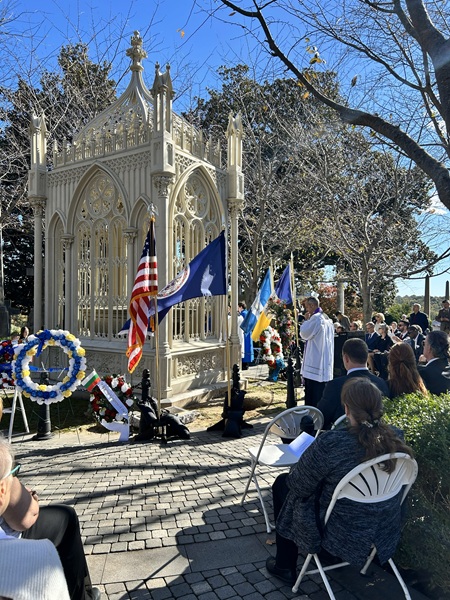
On August 2, 2025, I attended the Rappahannock Indian Tribe’s celebration recognizing their acquisition of ancestral lands along Fones Cliffs in Richmond County. Tribal citizens, partners, and friends all gathered at the Rappahannock Tribe Indigenous Conservation Center in Warsaw on a spectacular summer day. Since 2016, the Tribe has worked to restore their community to this historic land. DHR is grateful to have participated in one phase of this broader effort.
The Rappahannock Tribe conserved and rematriated a beautiful 969-acre tract of land in April 2025, partly with the assistance of a Virginia Land Conservation Fund grant. It was because of this grant that DHR was invited to join the already-in-progress project. The Fones Cliffs acquisition is unique for many reasons, but especially for its co-stewardship model and the multifaceted partnerships that created it. Over a period of about two years, DHR worked with the Tribe, The Conservation Fund, and other partners to complete the acquisition. We all labored together to submit both grant and easement applications, draft various documents, secure funding, research the property, and fulfill grant and legal requirements. With assistance from the Tribe, DHR found the property eligible for listing on the Virginia Landmarks Register as a Traditional Cultural Place of the Rappahannock People. As this process unfolded—and after many site visits and conversations—we began to better understand the property’s significance. The collaboration between the Rappahannock Tribe and DHR resulted in the recordation of a historic preservation and open-space easement held by the Board of Historic Resources that protects archaeological, riparian, and forest resources on roughly 934 of the 969 acres acquired. Multiple federal entities, at least five state agencies, as well as private conservation organizations and foundations came together to support the Rappahannock’s Return to the River program.
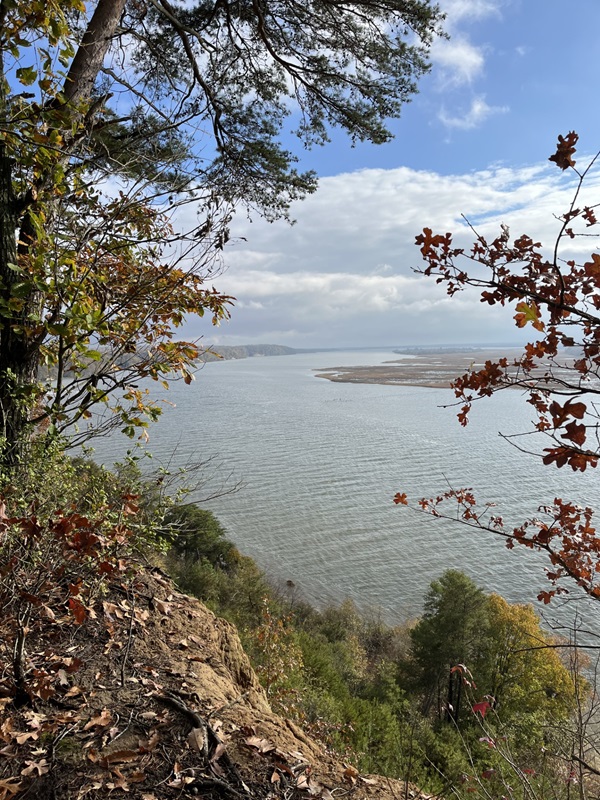
Over the course of my 19-year career with DHR, I have completed more than 170 perpetual historic preservation easements protecting over 12,600 acres of land throughout Virginia. The associated journey has taken me from Civil War battlefields to Palladian style stone barns, from substantial historic dwellings to a small frame schoolhouse, from churches and theaters to brick ruins, prehistoric archaeological sites and cemeteries. So, why does Fones Cliffs stand out as one of the most meaningful? For me, this land is different; it’s special. I loved spending time there. The land is defined by trees and stones, water and leaves, birds and brush and bears, wind and whispers, trails and dappled sunlight. It is creamy yellow-green marshes, eroding sandstone, and chimney falls. It is steep ravines, road traces, periwinkle ground cover, and fragments of indigenous clay pottery. It’s quiet, and yet not so quiet…often struck by the screech or caw of a bird, the crackle of dry leaves, the lap of the river against the base of the cliffs. It’s a bursting tidal landscape teeming with life, seen and unseen. Yet, the history of this land also tells of the same struggle and conflict I have seen on countless historic properties.
But unlike some of the others, there is hope in this place. It continually nourishes and renews. And it has been humbling for me to see how the Tribe cultivates this renewal through thoughtful and careful stewardship of the land and its resources. I have realized that there is so much I don’t know about the history of the Cliffs, the surrounding landscape, and the river ecosystem.
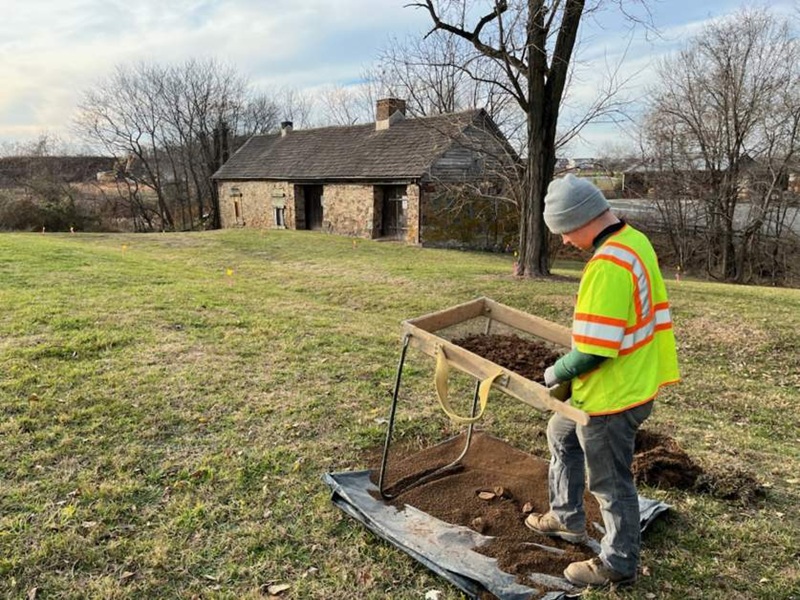
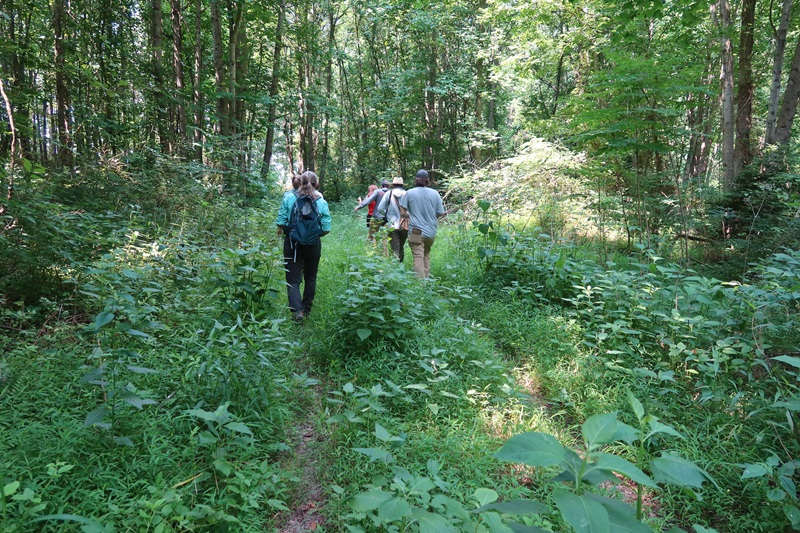
Every site visit we made to the property left a different imprint on me. The smooth trunk of a beech tree to lean against and rest. Brilliant hues of color. Huge patches of tangled grapevine. Watching a pair of bald eagles circle over the river and hearing the distinct sound their wings make as they cut the air. Sifting through soil as part of an archaeological survey and catching just a glimpse of the people who have inhabited this place. Walking along a ridgeline and thinking about how the land is sacred because it’s sacred to the Rappahannock people, who are so tangibly connected to it. Thinking about the power of strong communal memory. Meeting with members of the Tribe and staff to learn what the land means to them.
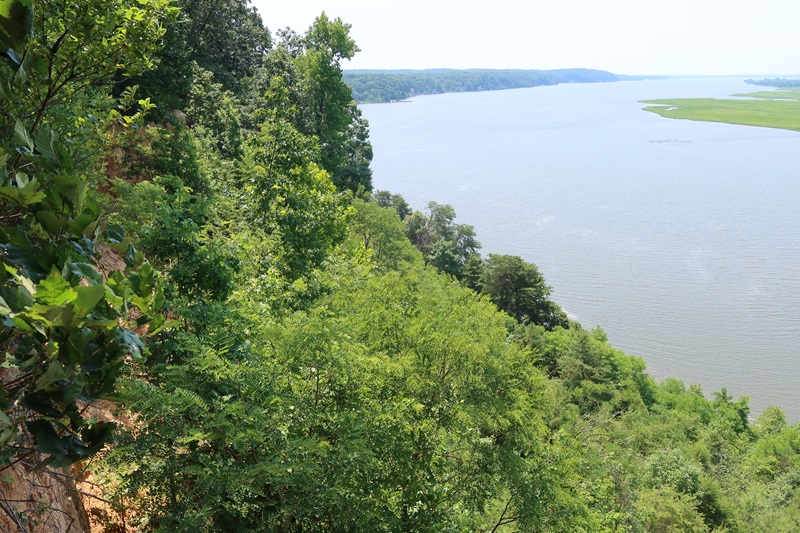
I feel truly blessed to be a part of the change that the Tribe’s ownership has and will continue to bring to this landscape. As indigenous stewards of the land, the Rappahannock will maintain an enduring legacy of preservation over their ancestral lands and lifeways. I am personally honored, and DHR is privileged, to be stewarding historic and natural resources on this property with the Rappahannock Tribe. We look forward to working collaboratively again on future projects.
On behalf of DHR, I would like to thank all the individuals and organizations who played a significant role in this conservation achievement. I would especially like to thank Chief Anne Richardson for fostering the strong and productive relationship that DHR has developed with the Tribe and staff, including Pat Morris and Jack Ryan, who answered our many, many questions and gave us guided tours of the property. We are grateful to our partners at The Conservation Fund, particularly for the tireless efforts of Heather Richards, who facilitated and championed this great project and was so helpful with our frequent requests for documents. I would also like to thank our sister conservation programs at the Department of Forestry, Department of Conservation and Recreation, and Virginia Outdoors Foundation, as well as our counsel at the Office of the Attorney General. Numerous staff at DHR likewise assisted with the completion of the project. Among these, our Agency Director Julie Langan and Division Director Megan Melinat supported the Easement Program’s goal to help conserve this property from the outset. Brad McDonald and Karri Richardson, my colleagues in the Easement Program, and Jess Hendrix, our Tribal Liaison, were invaluable. It truly was a team effort!