Historic landmarks across Wise County illustrate the pivotal role of the coal industry in reshaping Southwest Virginia at the turn of the 20th century.
By Austin Walker | DHR National Register Program Manager
Following the opening of the Pocahontas Mine No. 1 in 1882, the rush to establish mining operations and expand railroads across Southwest Virginia led to dramatic changes in the region’s built environment. Nowhere is this more evident than Wise County, where the confluence of a booming coal industry and the expansion of three major railroads into the county in 1891—the Norfolk & Western and Louisville & Nashville at Norton and the South Atlantic & Ohio at Big Stone Gap—led to a 400% increase in population over the next three decades. As emerging coal companies sought to quickly lay claim to and extract from the increasingly accessible deposits across the region, a new type of development began to rapidly appear on the landscape—the company town.
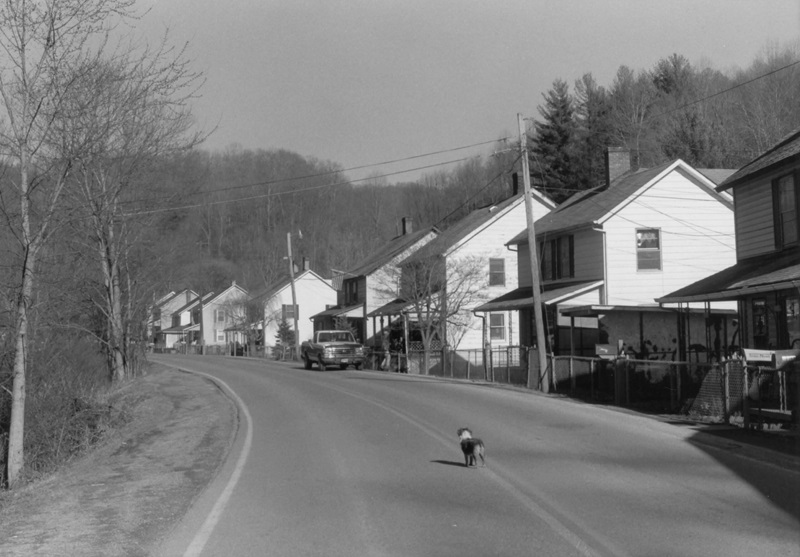
The Pennsylvania-based Virginia Coal & Iron Company (VCI), incorporated in 1882, was the primary founder and operator of coal company towns in Wise County. The company’s first coal camp at Stonega—originally called Pioneer—was opened in 1896. In 1902, VCI established the Stonega Coke & Coal Company to manage mining operations and facilities, with new camps at Osaka (1902), Roda (1903), and Arno (1908) following over the next several years. Further camps were founded at Exeter in 1917, Dunbar in 1919, and, finally, Derby in 1923.
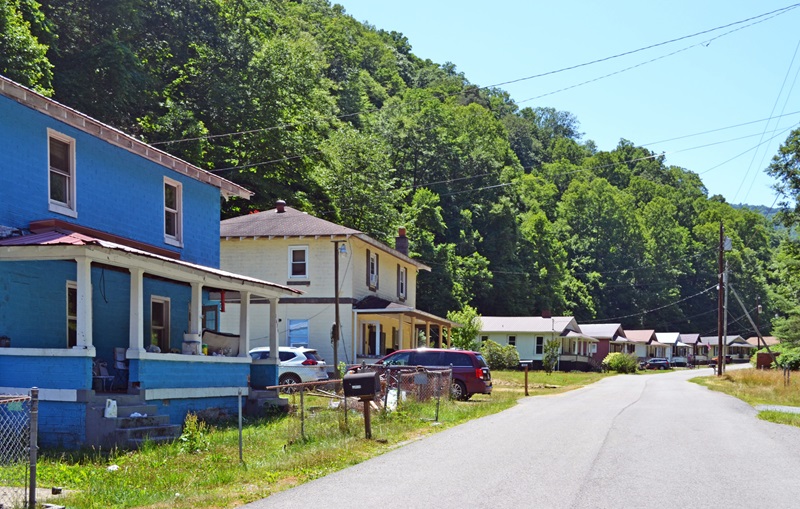
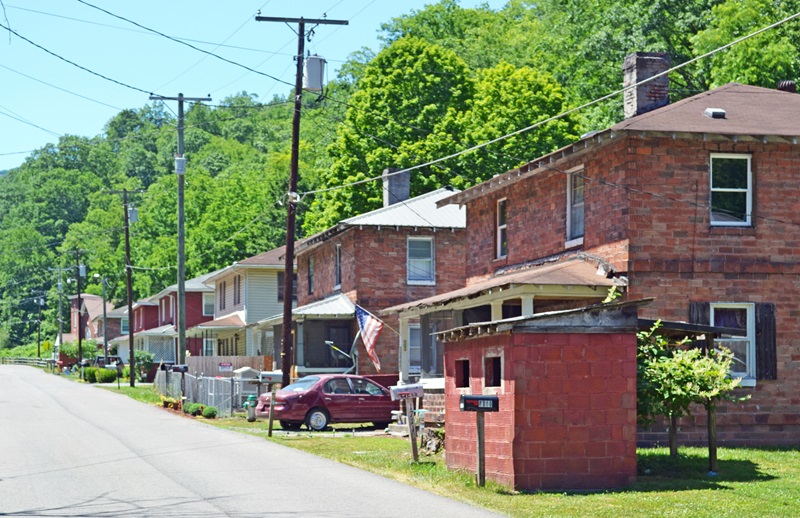
Coal company towns were built as an efficient way to house workers near the site of the mines, in areas that were otherwise sparsely populated. Different housing types of varying quality were provided for managers and workers and generally reflected the ethnic and racial segregation required by state and local laws during the Jim Crow era. During the boom period of the early 20th century, the mining workforce was composed of native Appalachians, African Americans, and recent immigrants to the United States, including Irish, Polish, Italian, and Hungarian populations. The camps were designed to be self-contained, providing miners and their families with goods, services, and entertainment; mature towns eventually included a company store, churches, schools, playgrounds, a theater or amusement hall, and other urban amenities.

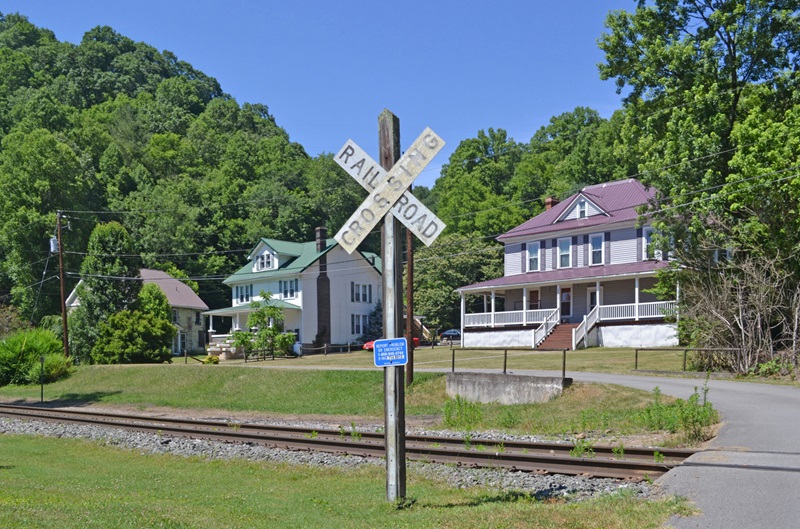
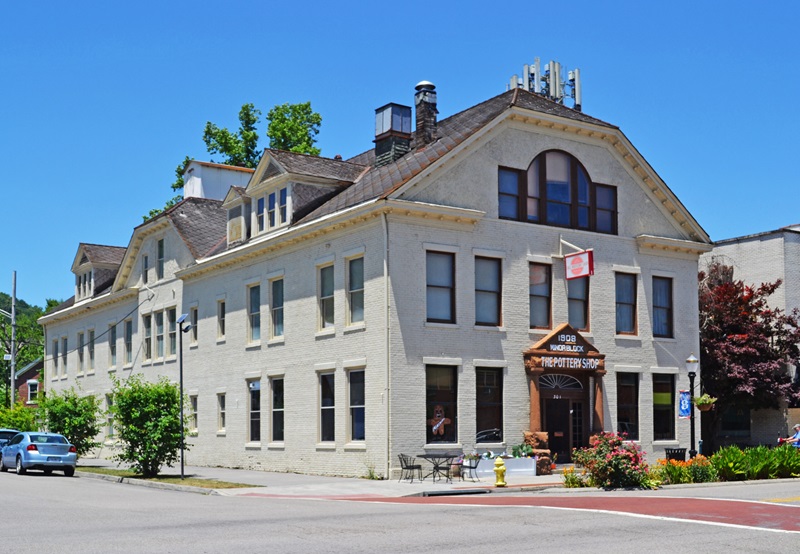
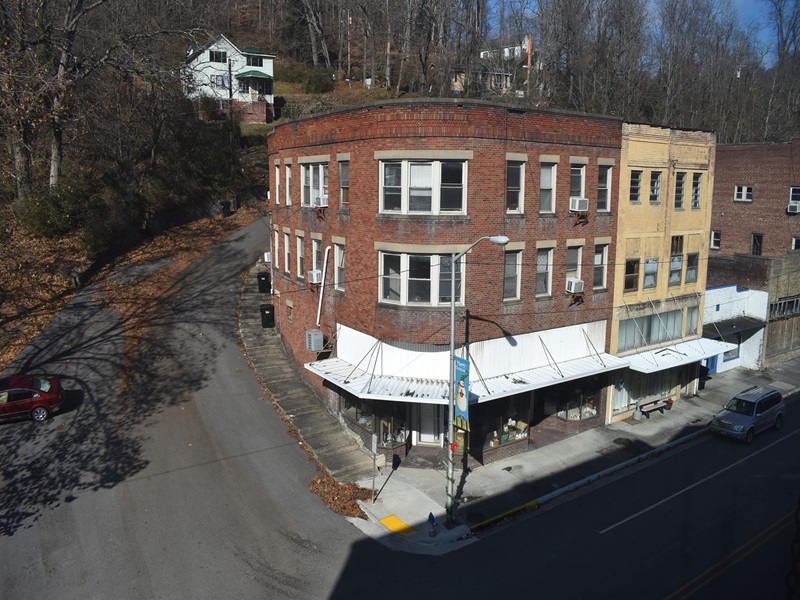
Along with the scores of company towns that emerged across Southwest Virginia around the turn of the century, the rapidly expanding coal and rail industries also drove the development of new commercial centers throughout the region. In Wise County, listed historic districts in the towns of Appalachia, Big Stone Gap, and St. Paul boast significant collections of early 20th-century commercial architecture that serve to illustrate the prosperity of the period.
Unique among Wise County’s listed landmarks are two public buildings that stand as the sole survivors of coal mining communities that have slowly disappeared since the mid-20th-century—the Virginia City Church and the Tacoma School.
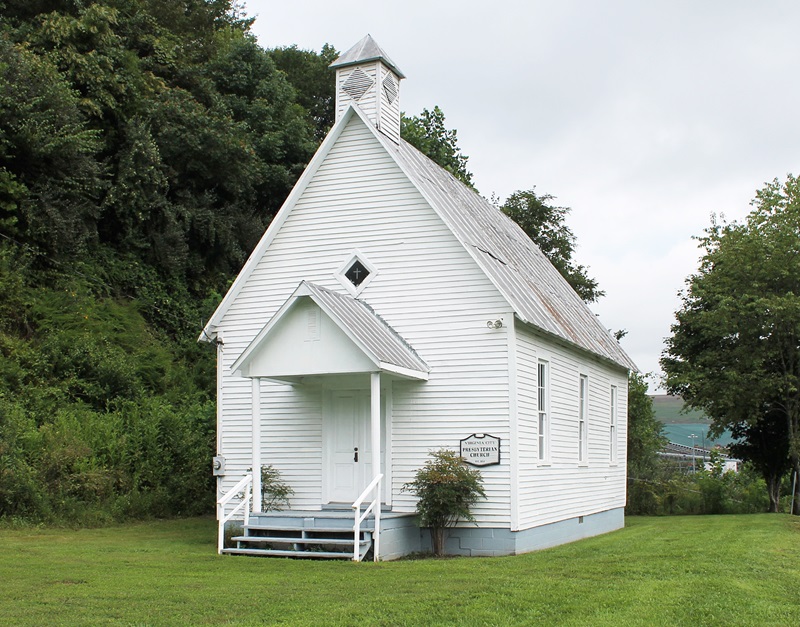
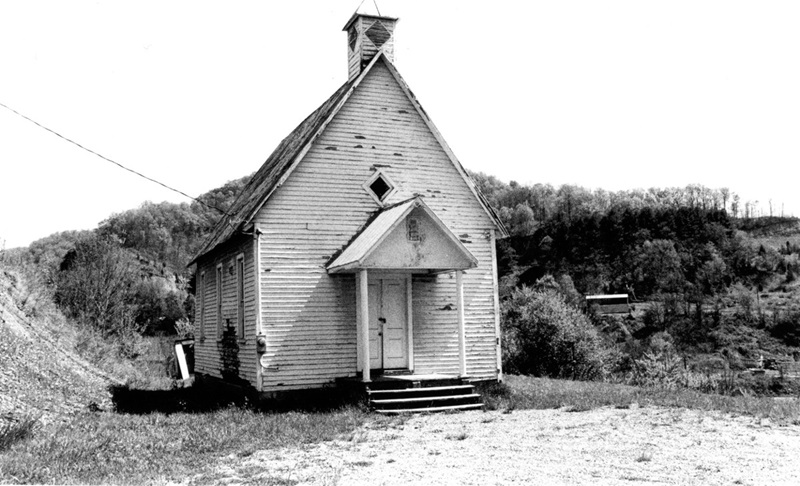
Originally settled by Scots-Irish and German families during the first half of the 19th-century, the community that would become Virginia City was transformed by the completion of the Norfolk & Western line to Norton. Speculation that coal would be found in the area led to the establishment of the Virginia City Post Office in June 1891 and the opening of a mine and company store by the Russell Creek Coal Company. In 1895, the company donated land for construction of the Virginia City Church and helped raise money for building materials. Erected by local craftsmen, the one-room frame church exhibits an unembellished vernacular form. Although maintained by the Presbyterian Church, it was open to all denominations within the community, which also included Baptists, Methodists, and many Catholic immigrants who worked in the mines. Notably, the building also served as Virginia City’s first schoolhouse.
The population of Virginia City peaked during the 1920s, at which time the community consisted of approximately 175 houses, two stores, a stable, a post office, the church, and a school. Ultimately, however, the quality of coal in the vicinity was not comparable to better grades discovered elsewhere in Wise County. The Russell Creek and Coal Company abandoned the mine within a few years of opening, with the lease subsequently changing hands several times until the initial closure of the mines in 1921. Following a brief resurrection in 1927, the Virginia Iron, Coal and Coke Company sold all the original mining equipment for scrap. During the 1940s, several smaller operations leased land in and around Virginia City, collectively employing around 435 workers. However, due to a lack of demand for the lower quality coal mined from the area, Virginia City never fully recovered. The post office was shuttered in 1956, and the area was subsequently leveled, leaving the Virginia City Church as the last vestige of a once-bustling mining community.
Also located along the newly completed Norfolk & Western line, the town of Tacoma was incorporated on March 6, 1890, with the laying out of lots, naming of streets, and the construction of a depot following shortly thereafter. Land was also allocated by the Tacoma Improvement Company for the construction of a school and masonic hall. However, while the flourishing coal mining and rail transportation industries drove considerable growth in other parts of Wise County, the population of Tacoma remained consistent between 1900 and 1920, eventually peaking at around 500 in 1930.
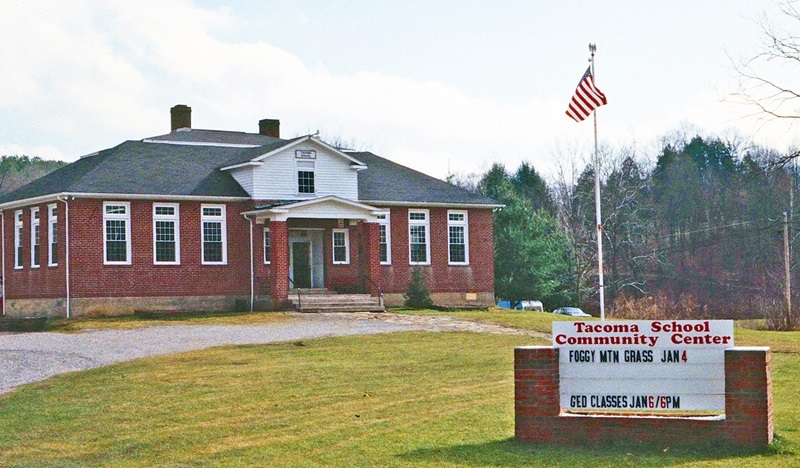
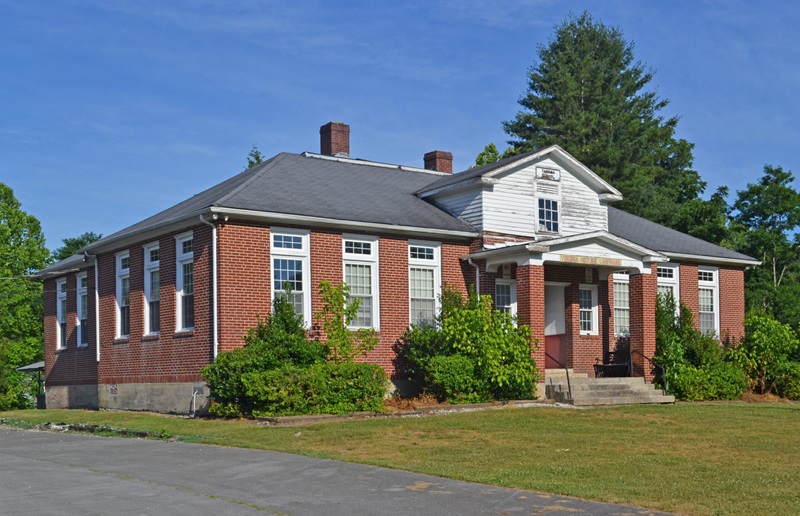
Completed in 1922, the Tacoma School was one of four Wise County schools from the period constructed using plans adopted from the North Carolina state school system. Rebuilt following a fire in 1936, the current one-story, four-room school features a hipped roof, eight-course common bond brickwork, and 23 elongated, double-hung windows with transoms. Despite the heavy impacts of the Great Depression, which saw Tacoma’s population and commerce dwindle from the late 1920s onward, several generations continued to attend the school prior to its closing in 1973. Now a community center, the Tacoma School remains a source of pride and identity for a town that has all but disappeared.
Surviving company towns and other coal industry sites in Wise County and across Southwest Virginia provide an increasingly rare look at a significant period in the commercial, industrial, social, and labor history of the region and the Commonwealth as a whole. As evidenced by the individual and community impetus behind many of these listings, they remain an integral part of preserving a collective memory of place as well.