For Preservation Month, a look at some of the recent Virginia places and stories that have inspired the author.
By Austin Walker | DHR National Register Program Manager
All images were captured by the author in 2026.
Surveying historic resources lies at the heart of preservation, serving as an integral first step for not only the state and national historic register process, but for nearly all of DHR’s program areas. As the traditional “50-year rule” continues to move forward into the late 20th century, developing an accurate and comprehensive inventory of historic buildings, structures, and sites across the Commonwealth remains an ongoing process. Fortunately, this can provide a great excuse to comb through old USGS maps, scour Google Street View, and get out into the field. What follows is an initial attempt at recording a collection of historic resources across three southeastern Virginia counties – many of which had little or no existing documentation in the Virginia Cultural Resources Information System (VCRIS) – and the distinctive places they represent.
Though modest in comparison to the county seat of Courtland, two Southampton County communities to the west – Drewryville and Capron – are representative of smaller late 19th century settlements that coalesced along the Atlantic & Danville Railroad mainline between Danville and Norfolk. Concentrated along a single road north of U.S. Route 58, Drewryville retains what is perhaps the most intact depot that survives along the former railroad as well as a complement of late 19th and early 20th century residences, two churches, and a cemetery. Particularly notable is the façade of the former Bank of Drewryville, located just across from the depot, which features a highly sophisticated sheet metal entablature comparable to that of the Old Merchants and Farmers Bank Building in nearby Emporia, which was produced locally by the H.T. Klugel Architectural Sheet Metal Works. Elsewhere in Drewryville, four free-standing columns, a home economics cottage, and athletic fields are all that remain of a 1920s school, which was demolished around 2010.
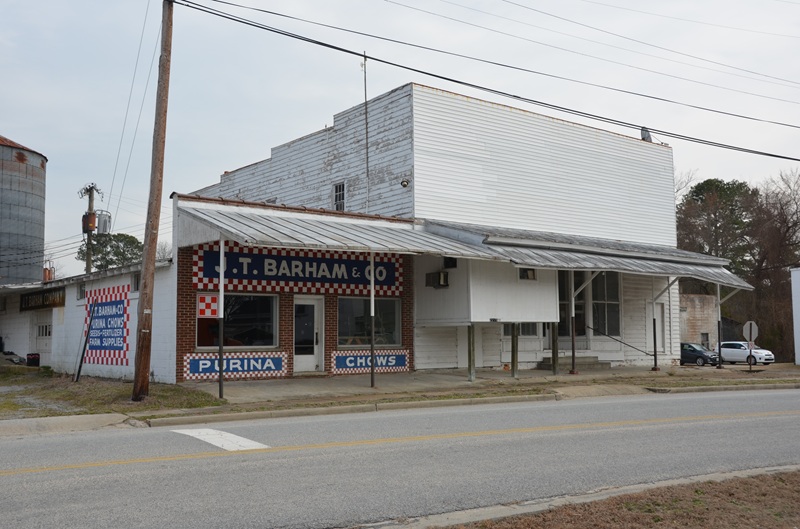
Originally known as Princeton, the town of Capron formally began with the construction of its railroad depot in 1888. The William H. Vincent House, an elaborate Queen Anne Style residence, was completed in 1889. Vincent, a co-founder of the local Vincent-Truitt Lumber Company, was instrumental in the establishment of Capron, while his grandnephew, William Vincent Rawlings, would later serve as the town’s mayor and as a member of the Virginia state senate. Also completed in 1889 was a still-extant store operated by J.T. Barham. Today, a number of Queen Anne and vernacular dwellings, as well as several churches, still line Capron’s Main Street.
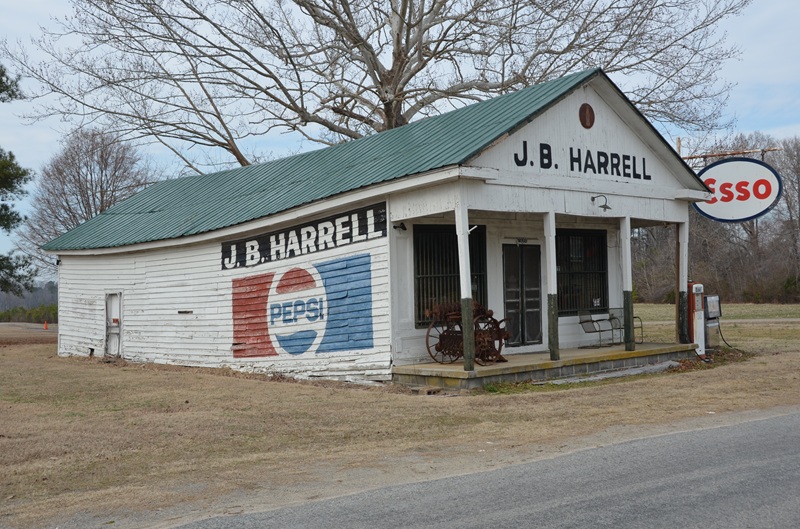
Located just northeast of Emporia, the small Sussex County crossroads of Grizzard was once a stop along the Claremont branch of the Atlantic & Danville Railroad. Today, the area retains its historic depot building as well as a country store dating to around 1920 and still bearing the name of proprietor J.B. Harrell. Further northeast, not far from the historic Sussex County Court House, sits another small railroad hamlet known as Lumberton. In addition to a modest frame depot – another along the Atlantic & Danville line to Claremont – the community also retains a large turn-of-the-century store.
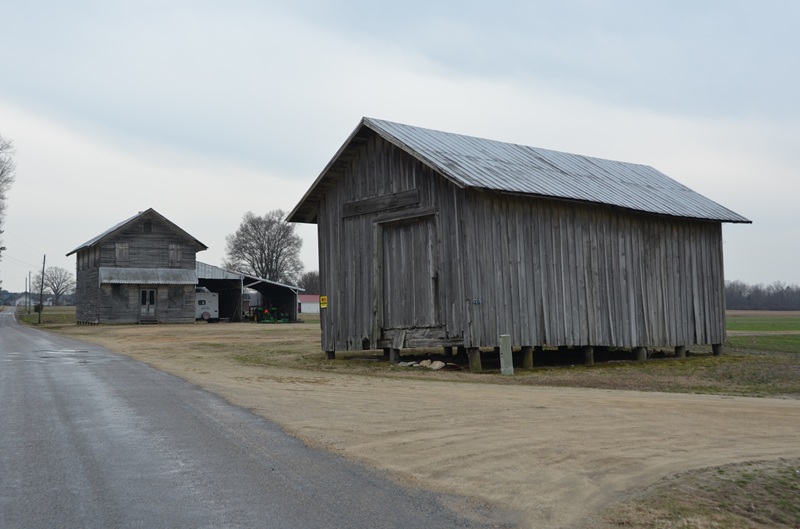

Located roughly five miles south of the town of Surry, the small crossroads of Elberon stands as a reminder of the communities that emerged along the Surry, Sussex, and Southampton Railway, which operated from 1886 until 1930 transporting lumber from the Surry Lumber Company sawmills at nearby Dendron to ports along the James River. While the crossroads once housed multiple stores, a service station, a railroad depot, and a schoolhouse, it is today defined primarily by the former Elberon Post Office, which operated from 1902 until 2010, and the ca. 1881 New Lebanon Christian Church.
Particularly striking among the small turn-of-the-century communities dotting this part of the Commonwealth is the Surry County town of Claremont. Originally platted in 1882 on acreage purchased from nearby Claremont Manor, Claremont began as a speculative real estate venture by developer J. Frank Mancha, who sought to establish a James River port to rival that of Norfolk. By the end of the 19th century, the settlement was flourishing, serving as the eastern terminus for the Atlantic & Danville’s narrow-gauge line and housing a range of other commercial operations as well as several churches and schools.

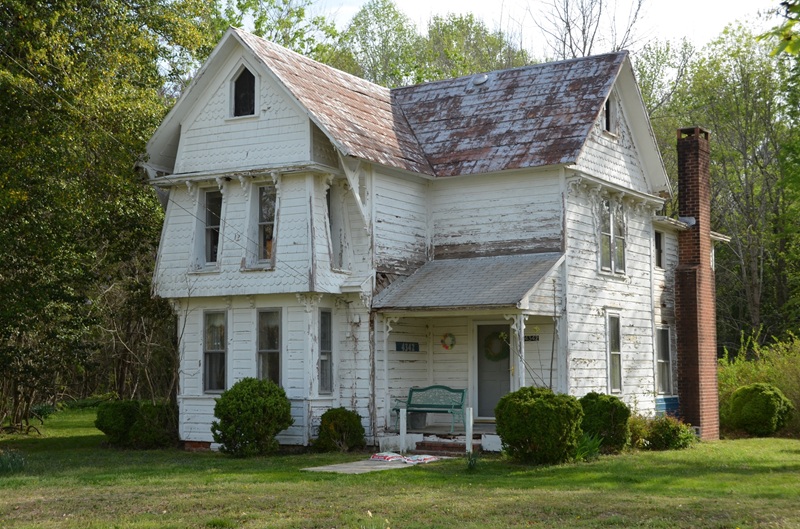
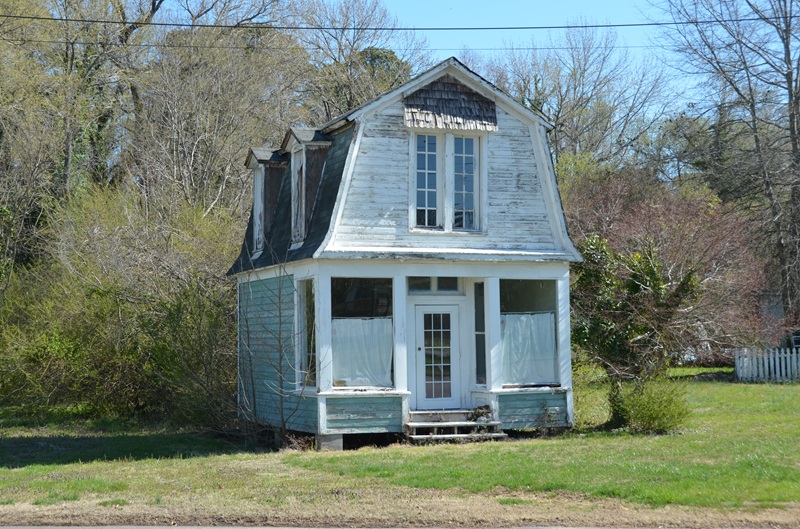
By the 1920s, however, it had become apparent that Claremont was not destined to succeed as a development scheme, and by World War II, the town had greatly declined. Today, Claremont retains a notable concentration of Victorian architecture, including a number of dwellings that display characteristics of the Second Empire and Queen Anne styles as well as more vernacular forms. Several of the town’s original commercial, civic, and religious structures also remain, including Ritchie Memorial Episcopal Church, an excellent example of late 19th century Carpenter Gothic architecture.


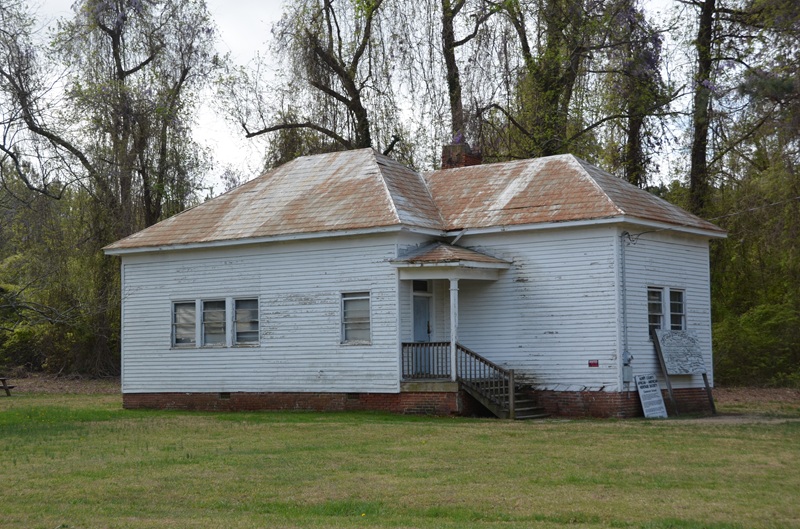
Three former Sussex County schools offer insight into educational opportunities available to rural African American communities during the 1930s. The Hickory Hill School, near the crossroads community of Yale, and the Huske School, located south of the town of Stony Creek, appear to follow the same standardized plan, reflecting an increasingly common trend for Virginia’s public schools. Meanwhile, the Booker School, just north of Sussex County Court House, exhibits similar hallmarks of Rosenwald-influenced rural schools from the era.


In Southampton County, not far from Courtland, the one-room Indian Road School holds a unique history. Noted as the Davis School on 1920 USGS maps, the school appears to have originally been built for the children of a single family before eventually becoming a public school for African American students. An August 1946 article from The Tidewater News still lists the Indian Road School among the county’s facilities for Black students, indicating the one-room building remained in use into the mid-20th century.
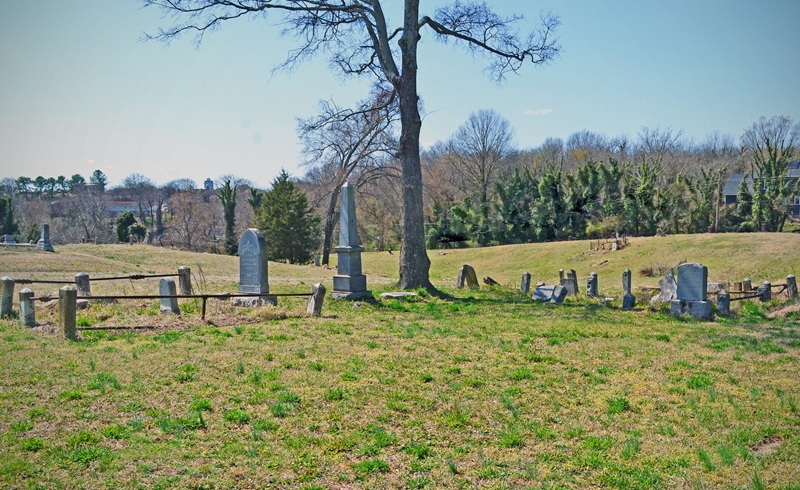
Finally, the Cypress School in Surry County is particularly notable as part of a larger complex centered around a Reconstruction-era Black church. Originally established in 1866, Mount Moriah A.M.E. is one of several churches in Surry County organized by "Mother" Amelia Howard, a teacher from Pennsylvania who was sent to Virginia by the Freedman's Bureau of Philadelphia to aid in the education of the African American population. The current ca. 1909 church building purportedly stands about 100 yards from the site of an oak tree under which the first congregants met. Situated between the church and school is a large cemetery originally established by the “No. 2 Burial Society” and containing a historic lodge building. Collectively, this cluster of historic resources represents an important center of African American life in Surry County during Reconstruction and the early 20th century.