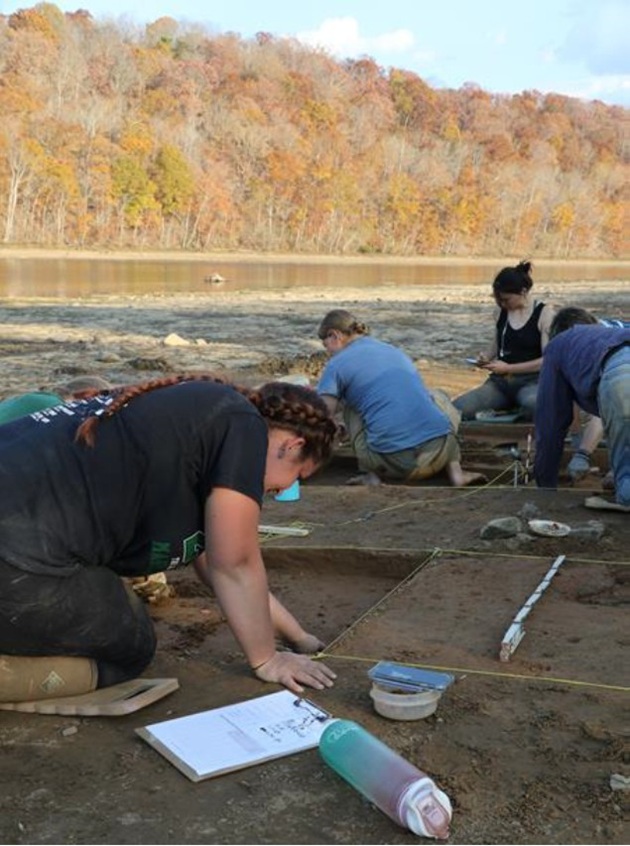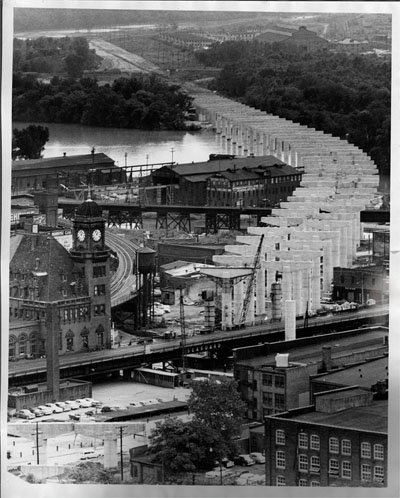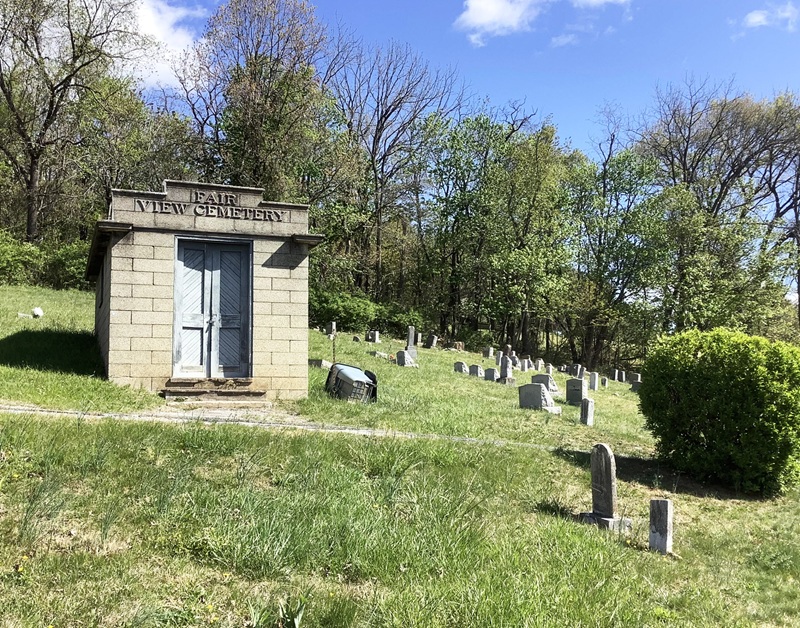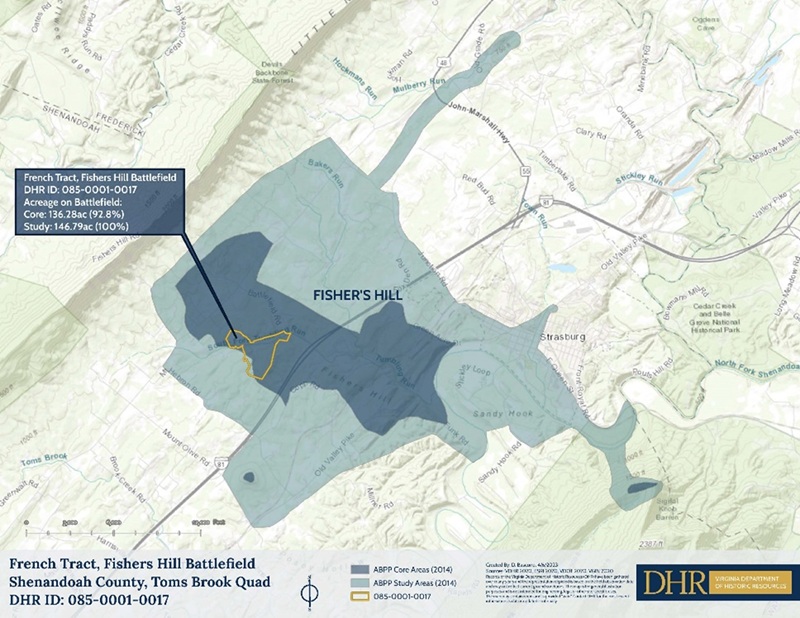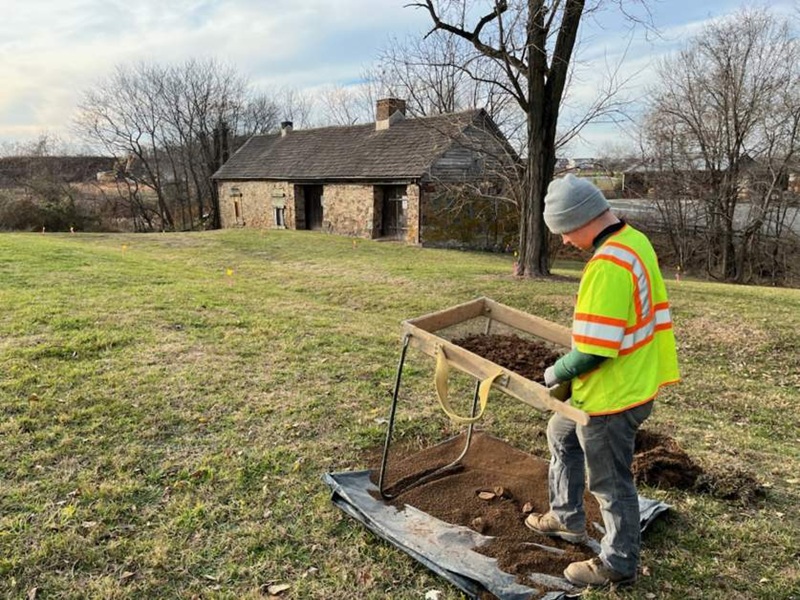
Staff from DHR's Review and Compliance Division reflect on the archaeological surveys conducted for a federal project on a historic site in Loudoun County and how those survey findings unearthed the human stories of enslavement, family continuity, displacement, and resilience during the antebellum and Reconstruction periods of Virginia and American history.
By Chardé Reid and Sherry Teal | DHR Review and Compliance Division
The Arcola Quarters for the Enslaved (AQE) in Loudoun County, Virginia
What do archaeologists, a 19th-century ladies club, Freemasons, and a little-known federal law have in common? They are all connected to the story of how the Arcola Quarters for the Enslaved are being preserved in Loudoun County. Buildings saved by grass-roots historic preservation groups are well-known in communities across the United States. How preservation started is a lesser-known story with a spirited beginning in Virginia. In 1853, one building and a few determined women soon engaged people from around the world to start what we know as historic preservation in the U.S.
A Few Good Women Making History
In 1853, Louisa Bird Cunningham saw George Washington’s house falling into disrepair on the banks of the Potomac River. She soon started the Mt. Vernon Ladies’ Association to raise money to save the first U.S. President’s house and 200 acres of land. The organization created other chapters and raised money from across the U.S., France, Ireland, and England. The Freemasons, Knights Templar, fire companies, and military groups also donated (Mt. Vernon, 2026).
The Mt. Vernon Ladies’ Association’s efforts surged in popularity and soon newspapers were attracting donors like J.P. Morgan, one of the richest men in the world, inventors and entrepreneurs Henry Ford and Thomas Edison, and actors like Edwin Booth—brother of John Wilkes Booth—and politicians like U.S. Senator Edward Everett. One group of women, who some men had at first scoffed at, raised over $5.7 million dollars in today’s money. After the Mt. Vernon Ladies’ Association purchased Washington’s home, preservation efforts in the U.S. grew and other clubs were organized. This public groundswell laid the foundation for organizations who lobbied Congress for preservation legislation (Mt. Vernon, 2026).
“The spirit and direction of the Nation are founded upon and reflected in its historic heritage,”
—National Historic Preservation Act, 1966, Declaration One
The People’s Voice and Congressional Action
The U.S. Congress has been enacting laws to preserve and protect American interests for the last 237 years. In 1966, enthusiastic historical associations and other public organizations urged the 89th Congress to enact a historic preservation law. The organizers wanted to prevent further loss of historic buildings from federally funded construction projects. The National Historic Preservation Act (NHPA) was signed into law by President Lyndon B. Johnson, a law that could trace its beginnings back to those intrepid ladies in 1853 Virginia (S.3035).
“The historical and cultural foundations of the Nation should be preserved as a living part of our community life and development in order to give a sense of orientation to the American people,”
—National Historic Preservation Act, 1966, Declaration Two
After the NHPA was signed, there were new rules, or regulations, that Congress decided were necessary. Every federal agency that was involved with a construction project had to operate under the rules of NHPA to consider historic buildings, places, objects, and sites, before acting in a way that could damage or change their historic character. These preservation regulations, in Section 106 of the NHPA, are what guide federal agencies and state governments today in how they consider historic landscapes before they act (S.3035).
Section What? (And Why It Matters to Virginians)
At the Virginia Department of Historic Resources (DHR), a group of archaeologists and architectural historians with formal training and years of experience review federal projects under Section 106 before the projects have an effect on Virginia’s historic cultural landscapes. They also offer technical assistance to agencies who need help. DHR’s Review and Compliance Division can offer recommendations, but it is the federal agencies’ responsibility to decide on how their project will move forward after the Section 106 review process ends (Title 36 Part 800).
In 2025, a federal agency requested DHR’s assistance to review a permit that the Arcola Quarters project may need. That is how we learned about this rare surviving historic resource that is being stabilized and rehabilitated by public and private preservation groups and descendant communities in Loudoun County.
“The historic properties significant to the Nation's heritage are being lost or substantially altered, often inadvertently, with increasing frequency,”
—National Historic Preservation Act, 1966, Declaration Three
By 1853, the Arcola Quarters (AQE) had been housing enslaved laborers on a plantation for over 35 years. The building would remain standing for the next 173 years, allowing the stories of the men, women, and children who occupied the space to be told. Twenty-first-century preservationists in partnership with descendant communities now have the privilege and unique opportunity to:
…determine what interpretive services and techniques will best communicate the most important stories, values, meanings and ideas of the site to the visiting public while preserving and utilizing the extant historic structures and site features.
—Arcola Quarters for the Enslaved Interpretive Master Plan, 2022
Archaeologists Fill In the Details of Lives Lived
AQE is a rare surviving example of an early‑19th‑century stone quarters for enslaved people in Northern Virginia. Archaeological investigation of the property recovered tangible evidence of the everyday lives of the men, women, and children who lived there. The project demonstrates how archaeology, historic architecture, and meaningful engagement with descendant and local communities can inform and strengthen preservation outcomes under Section 106 (AQE Master Plan, 2022).
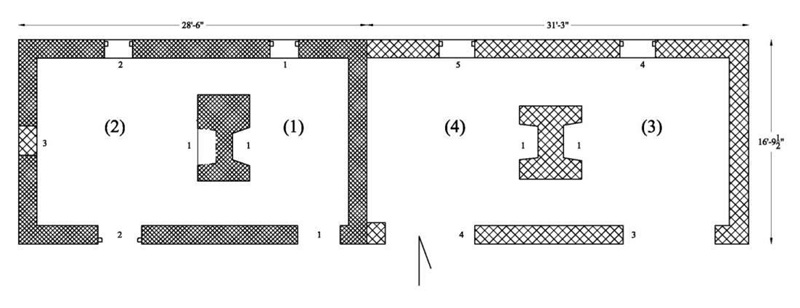
The AQE tells a layered story of Black life in Loudoun County across the antebellum and Reconstruction eras. Dendrochronology and architectural analysis date the western block of the structure to around 1813, placing its original construction squarely within the ownership of James Lewis. The eastern block, a circa 1845 addition, indicates the site grew under the next generation, an expansion that reflects changing household needs and the continued reliance on enslaved labor to sustain agricultural and domestic operations (AQE Master Plan, 2022).
Arcola’s Land and Families
When James Lewis died, his daughter Martha J. Lewis inherited AQE and, over the following decades, consolidated additional family lands through inheritance and conveyances. By 1860 she controlled multiple parcels, including the Charles Lewis farm and several family houses. Census and property records from this period suggest that people enslaved on James Lewis’s estate were often recorded under the names of other heirs, a reminder of how enslaved lives were fragmented across legal documents and family transfers (Higgins et al. 2023).
Martha and her sister Susan moved to a Lewis farmhouse east of AQE after 1850, leaving the quarters and its immediate landscape to bear witness to the daily rhythms of those who lived and labored there. Through extensive research of probate records, censuses, and other archival documents, the descendant community and researchers have recovered the names of some of the enslaved who may have made AQE their home (AQE Master Plan, 2022; Higgins et al. 2023).
The end of the Civil War brought profound change to the AQE and Loudoun County. In the Reconstruction era, AQE became home to the family of Levi and Sallie Neal, African American tenants who occupied the property as formerly enslaved people and their descendants navigated new forms of labor, land tenure, and community life. Their presence at AQE illustrates a common pattern across the region: continuity of place even as social and legal systems shifted, and the emergence of Black households striving for stability and autonomy in the face of economic and political upheaval (Higgins et al. 2023).
Archaeology at Arcola
Phase I and II archaeological survey was conducted by William & Mary Center for Archaeological Research (W&MCAR) in 2023 and 2025. The results of the archaeological survey offer a glimpse into the everyday lives of families and individuals who lived at AQE during the antebellum and Reconstruction eras. W&MCAR archaeologists excavated 114 shovel test pits (STPs) across AQE, an adjacent late-19th-century American Foursquare, and the surrounding yard; 66 STPs produced artifacts, yielding 601 artifacts (Higgins et al. 2023).
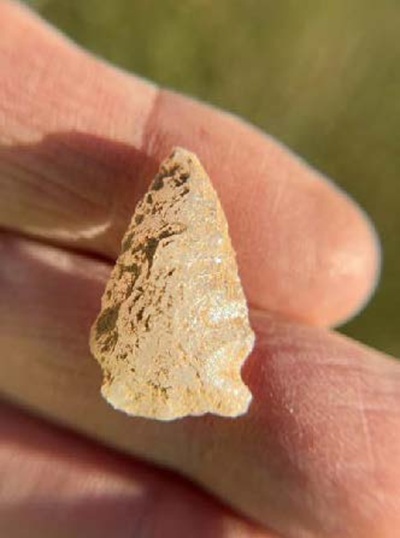
Subsequent geophysical survey, test units, and expanded investigations increased the total recovered artifacts to 4,352 items from the Phase II and II investigations. Just over half of the STP assemblage (52%) dates to the antebellum and Reconstruction periods, and the material record spans domestic wares, architectural debris, and well‑preserved faunal remains. An Early Archaic Palmer Corner Notched biface recovered during the excavations also attests to much earlier human presence on the landscape (Higgins et al. 2023; Higgins et al. 2025).
Several test units exposed dense concentrations of antebellum and Reconstruction period artifacts. The high artifact density and associated stone features on the north side of AQE suggest a well‑preserved domestic trash midden likely associated with enslaved occupants, revealing information about consumption, discard practices, and household routines (Higgins et al. 2023).
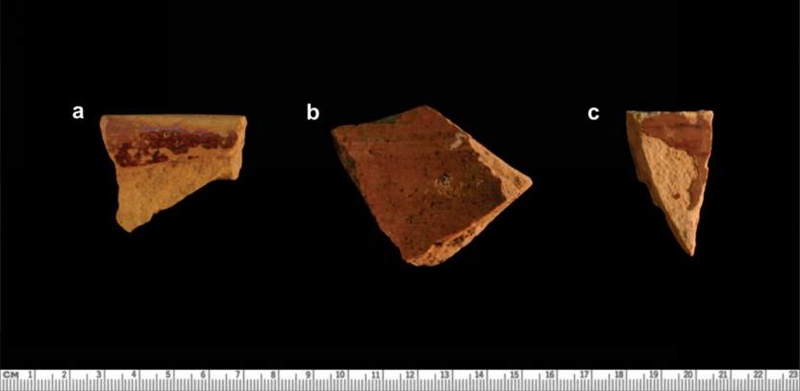
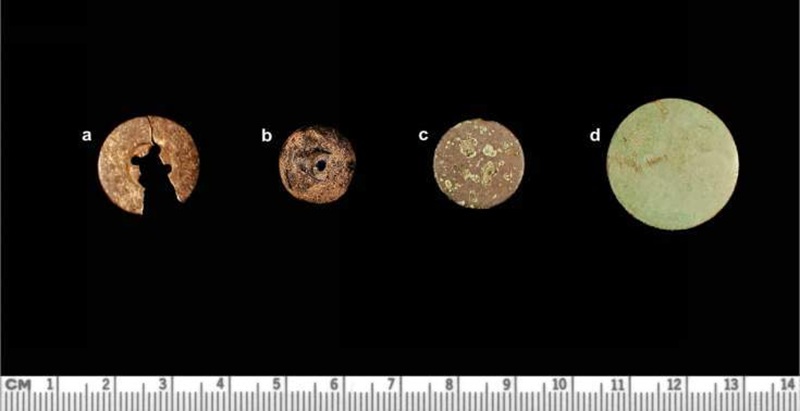
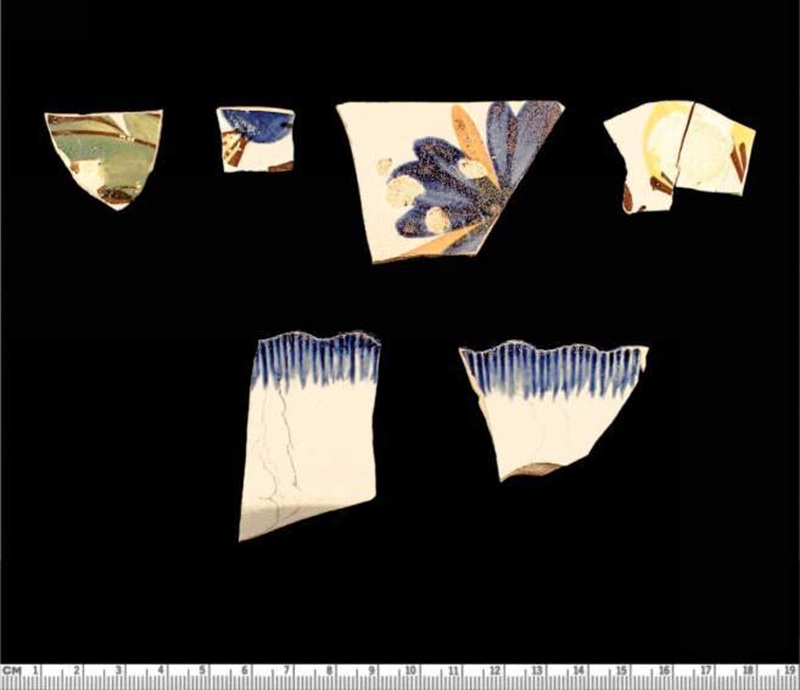
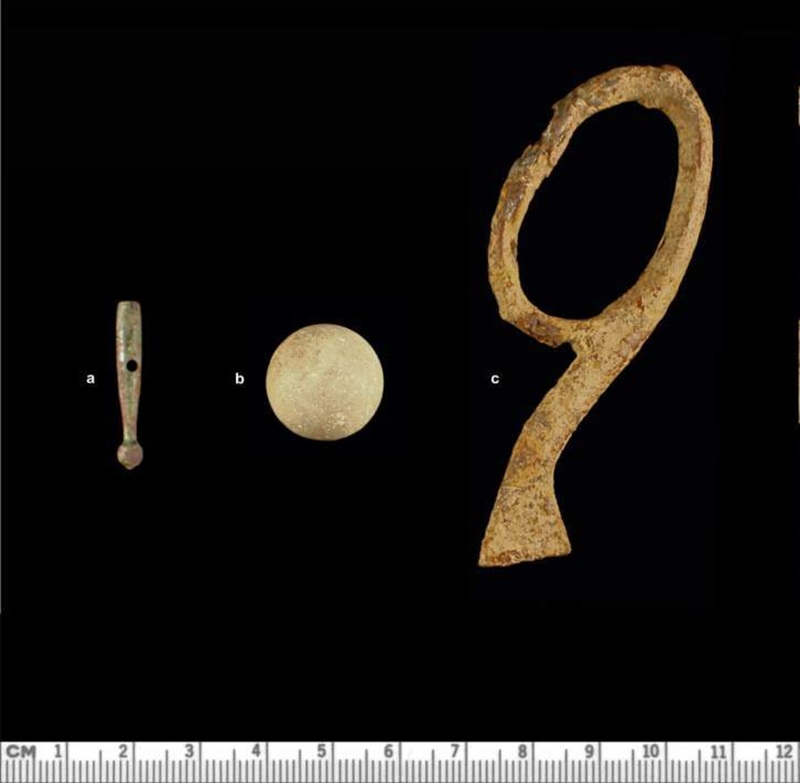
The artifact assemblage is dominated by kitchen and architectural materials. Coarse earthenwares make up the largest ceramic group, followed by refined wares such as creamware and pearlware. Other common finds include tobacco pipe fragments, window glass, bottle glass, wrought and cut nails, brick, and a variety of metal objects. A substantial faunal assemblage, including cattle, pig, chicken, fish, rabbit, and other species, provides direct evidence of diet and foodways. Small personal and play items, such as a stone marble, point to children’s presence and everyday domestic life (Higgins et al. 2023).
Pictured below: Archaeological excavations inside AQE showing surviving wood floor joist fragment. (Photos courtesy of the William & Mary Center for Archaeological Research)
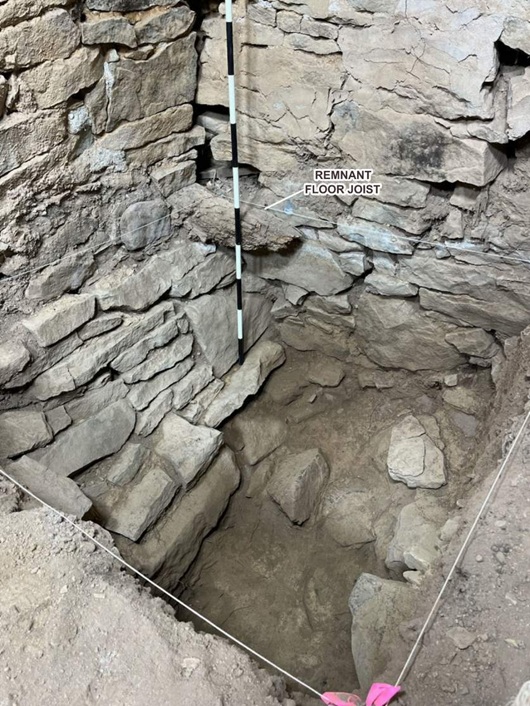
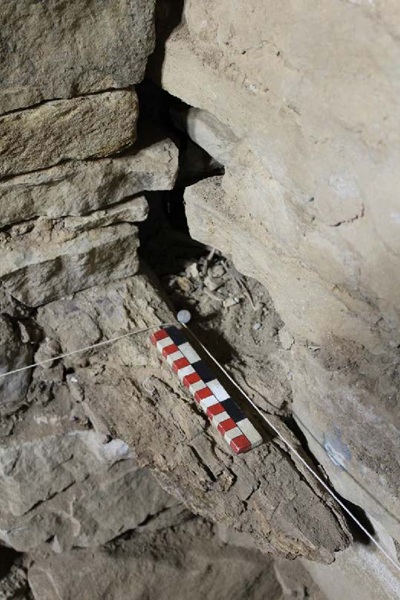
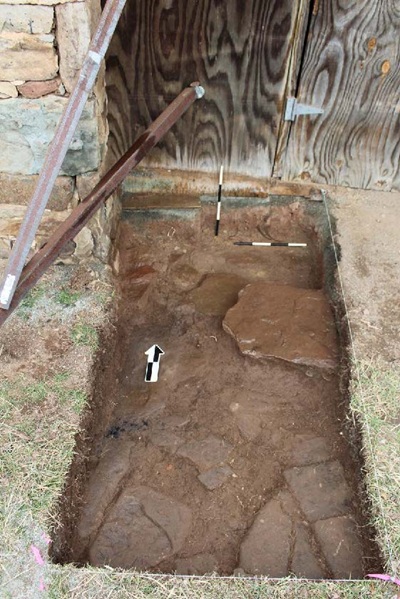
Excavations inside and immediately outside the building documented the stone foundation, original raised wood flooring elements (joists, cleats, collapsed boards), and multiple foundation features that clarify the building’s construction and later alterations. Evidence of burned or destruction fill in some contexts, along with mixed stratigraphic deposits in interior units, points to complex formation processes—repair, collapse, and reuse—over the 19th and early 20th centuries (Higgins et al. 2025).
The combination of structural features and artifact distributions allows archaeologists to reconstruct activity zones: living and working spaces, entryways with stepping stones and paving, and exterior yards where food preparation, refuse disposal, and children’s play occurred (Higgins et al. 2025).
The People Behind the Objects
Together, the material culture from AQE documents multi‑generational occupation and a wide range of domestic activities carried out by enslaved people and, later, Reconstruction‑era Black families. The assemblage’s median ceramic dates cluster in the early 19th century, supporting long‑term use of the site. Faunal remains and kitchen wares illuminate diet and provisioning strategies; architectural debris and flooring elements reveal building practices and household organization; small personal items and play objects speak to family life and social continuity (AQE Master Plan, 2022).
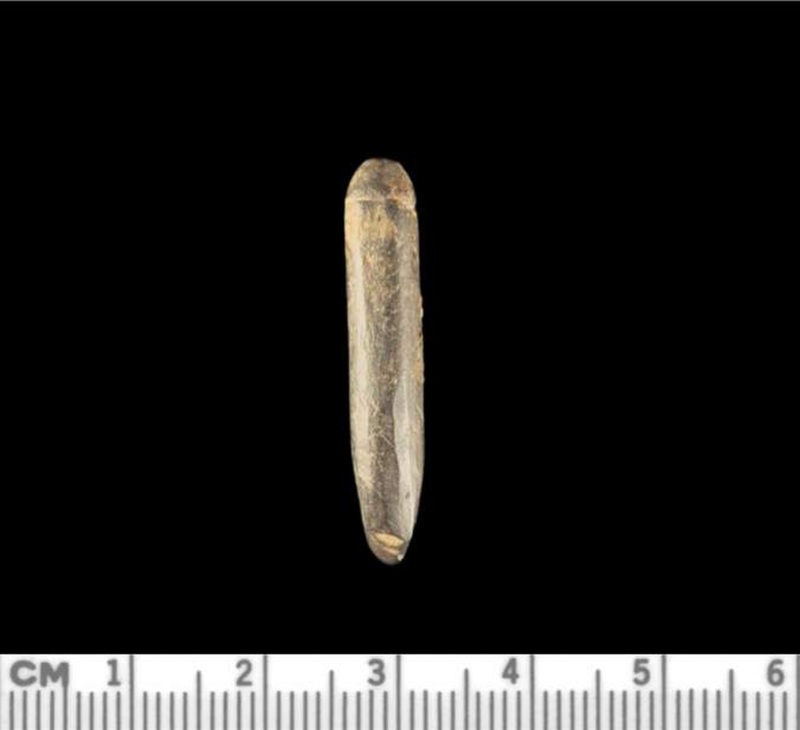
WMCAR’s analyses conclude that the AQE site has strong research potential to inform domestic themes and African American lifeways both before and after emancipation (Higgins et al. 2023; Higgins et al. 2025). As an archaeological complement to the AQE building’s architectural significance, the material record deepens our understanding of enslavement, survival, and community formation in Loudoun County and underscores the importance of preserving and interpreting these tangible traces of American history (AQE Master Plan, 2022).
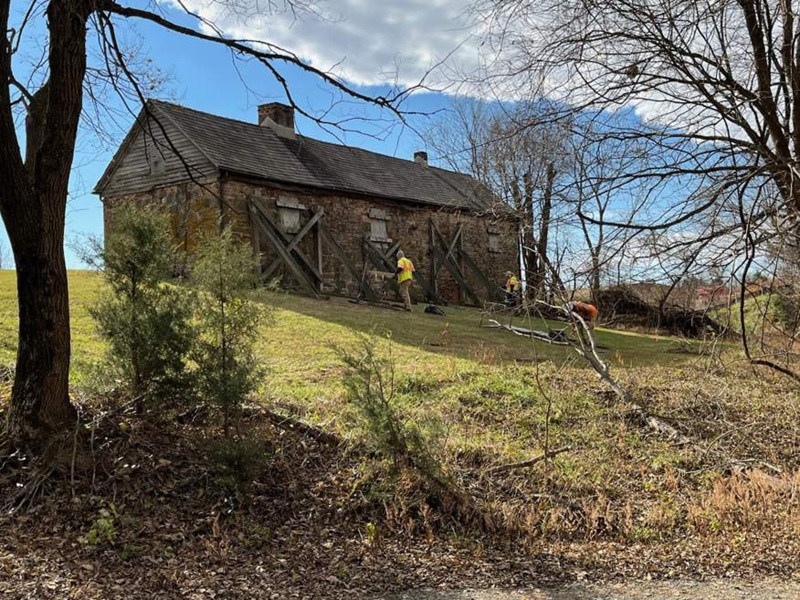
Overall, the architectural phases, archaeological investigations, and the documentary record at AQE illuminate more than building dates; they reveal the human stories of enslavement, family continuity, displacement, and resilience. The site offers a tangible link to the lived experiences of enslaved people in early‑19th‑century Loudoun and to the Black families who shaped the landscape during Reconstruction, underscoring the importance of preserving and interpreting these places for a fuller understanding of local and national history (AQE Master Plan, 2022).
“The preservation of this irreplaceable heritage is in the public interest so that its vital legacy of cultural, educational, aesthetic, inspirational, economic, and energy benefits will be maintained and enriched for future generations of Americans.”
—National Historic Preservation Act, 1966, Declaration Four
•••
Bibliography
The Early History of the Mount Vernon Ladies' Association. Mt Vernon Ladies’ Association. https://www.mountvernon.org/preservation/mount-vernon-ladies-association/early-history
Arcola Quarters For The Enslaved Interpretive Master Plan. Loudoun County Parks, Recreation and Community Services. Arcola, Loudoun County, Virginia. Volume 1 - Revised Report.
Code of Federal Regulations, Title 36 Part 800, Protection of Historic Properties. 16 U.S.C. 470s. 65 FR 77725, Dec. 12, 2000.
S.3035, An Act to establish a program for the preservation of additional historic properties throughout the Nation, and for other purposes. 89th Congress, 2nd Session. 80 Stat. 915 -Public Law 89-665, 1966.
Higgins III, Thomas F., David W. Lewes, Elizabeth M. Monroe, Ph.D., Kevin Goodrich, and Sarah Lowry. 2023. Phase I/II Archaeological Site Identification and Significance Evaluation, Arcola Quarters for the Enslaved (Site 44LD2036), Loudoun County, Virginia. Prepared by William & Mary Center for Archaeological Research, Williamsburg, Virginia.
Higgins III, Thomas F., David W. Lewes, Elizabeth J. Monroe, Ph.D., and Heather Little. 2025. Additional Archaeological Testing at Arcola Quarters for the Enslaved (Site 44LD2036), Loudoun County, Virginia. Prepared by William & Mary Center for Archaeological Research, Williamsburg, Virginia.