/
/
Climatological Disasters

Climatological Disasters

Climatological disasters are those that are caused by extreme shifts in the climate that can last from seasons or up to many years. These disaster types are also referred to as climate-related disasters.

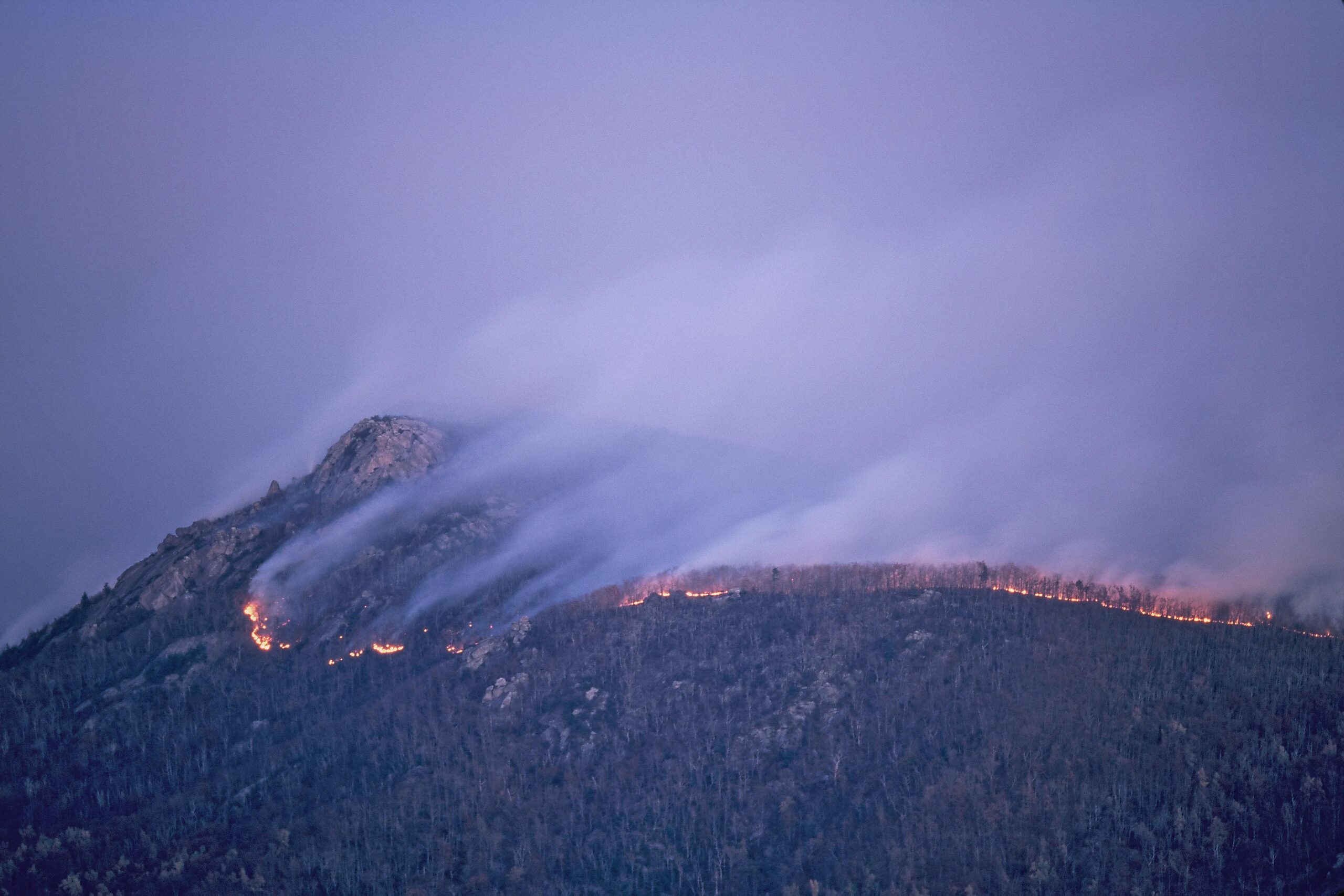
vastateparksstaff, CC BY 2.0, via Wikimedia Commons

Navigation

Examples of climatological disasters include:

  • Drought – a lack of precipitation for a prolonged time that results in a shortage of water in an area. Droughts can occur in any region across the United States, but regions with minimal rainfall and scarce water supply are more susceptible to droughts.
  • Wildfire – unexpected and uncontrolled fires that burn in natural areas such as a forest, grasslands, and plains, stemming from either natural or human causes. Both droughts and wildfires are most prevalent from summer through fall as heightened temperatures contribute to dry conditions.[i]
  • Extreme Temperatures – include heat waves and cold waves that are more extreme than an area’s normal averages.[ii]
  • Winter weather – a broad category of events encompassing a variety of hazardous conditions such as snowstorms, ice storms, freezing rain, blizzards, and extreme cold temperatures.
  • Other hazards driven by climate change.

Virginia may be at risk for any of the above climatological disaster types (drought, wildfires, extreme temperatures, or winter weather).

For more information on Climatological Disasters and Risk Planning visit the following links:

            Drought: https://www.drought.gov/sectors/hazard-planning-preparedness

            Extreme Heat: https://community.fema.gov/ProtectiveActions/s/article/Extreme-Heat

Wildfires: https://community.fema.gov/ProtectiveActions/s/article/Wildfire

Winter Weather & Extreme Cold: https://community.fema.gov/ProtectiveActions/s/article/Winter-Storm

Overview of Virginia’s Risk for Climatological Disasters

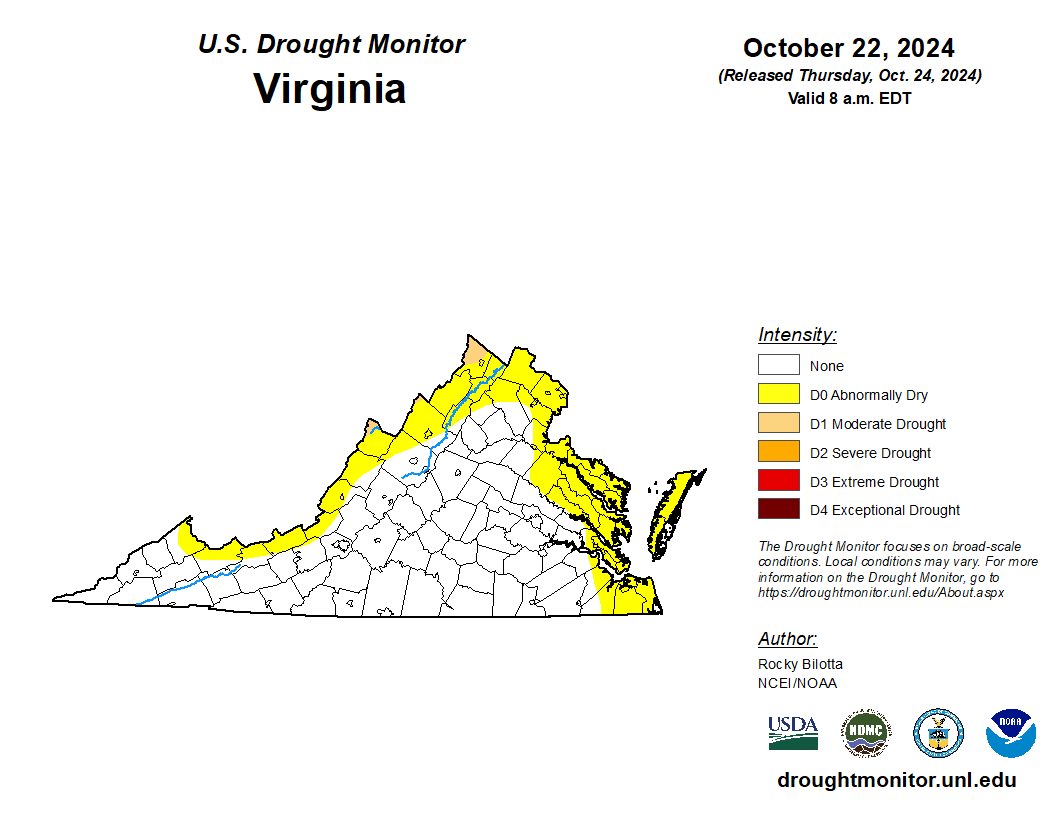
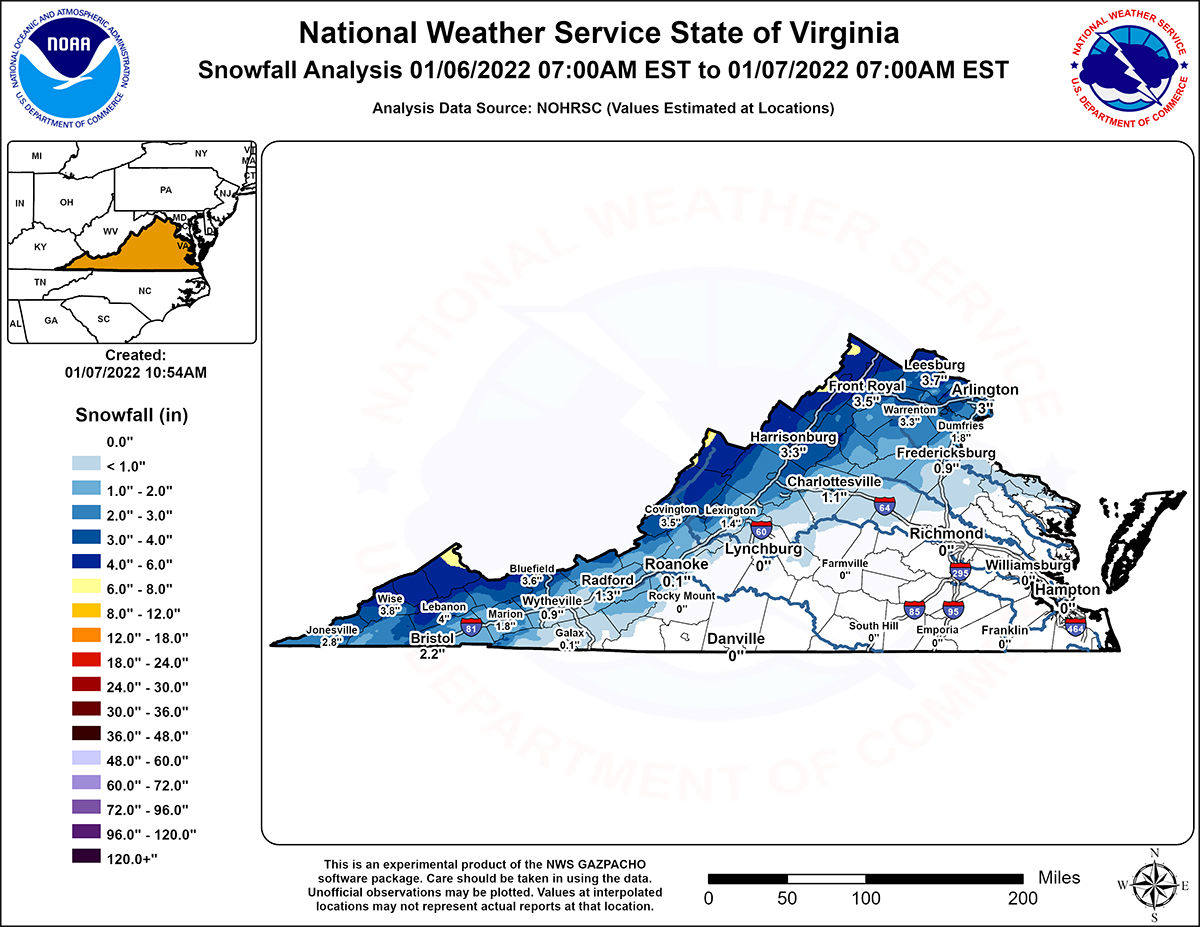
Climatological disasters have had a serious impact on Virginia, with 16.5% of billion-dollar disasters caused by winter storms and 11% due to drought.[iii] Winter storms occur mainly in the upper Midwest and Great Plains regions of the United States; however, many East Coast states including Virginia are still at risk. While these storms can occur anywhere, they have a higher impact in the northern and westernmost regions of Virginia, including areas near the Appalachian Mountains. These regions typically experience heavier snowfall and more severe winter weather conditions during winter storms. Drought, as of 2024, primarily affects the Eastern Shore and mountainous regions of Virginia, though it may occur in any region. Dry climatic conditions and higher water demand have increased the risk of drought for these areas. Wildfires occur in forested areas in Virginia, especially those near mountainous areas such as in Charlottesville, Roanoke, and Shenandoah. Dry conditions, low humidity levels, proximity to urban infrastructure, and human activity contribute to igniting these large fires. Additionally, regions experiencing drought are at higher risk for wildfires due to the creation of a dry, flammable environment. Virginia is also experiencing increasing annual temperatures, with Richmond’s average annual temperature having risen 2.8 degrees Fahrenheit, resulting in a rising number of extreme heat days.[iv]

The first documented climatological hazards recorded in Virginia were by early Jamestown colonists in 1607 when they discovered that the American Indians ignited fires to burn down the wildlands for farming, hunting, and/or expansion. These colonists also experienced the first recorded drought in Virginia from 1606 to 1612 that contributed to the famine, scarce water supply, and low survivability within the colony. One of the earliest and worst snowstorms in Viginia on record was the Washington-Jefferson snowstorm in 1772 that brought up to three feet of snow to central and northern Virginia. This historic event was documented in the diaries of both George Washington and Thomas Jefferson. The largest wildfire ever recorded in Virginia was in Shenandoah National Park in early November 2000 when two small human ignited fires combined, spreading rapidly. This disastrous event burned over 24,000 acres, requiring almost 900 firefighters and $3.6 million to control the blaze. The worst drought in Virginia history was from 1999 to 2002 due to lack of precipitation and complex weather patterns such as La Niña. At its peak in August 2002, 30.5% of Virginia was experiencing exceptional drought, 25.9% in extreme drought, 17.1% in severe drought, 18.7% in moderate drought, 6.6% was abnormally dry, and only 1.2% was without drought effects. [v]

Government or Organizational Representatives

I am a Local, Regional, or State Government or Organizational Representative: 

Disaster Preparedness

For Local Governments

While some climate-related disasters like droughts, extreme temperatures, and winter storms can be predicted to an extent, wildfires may have no early warning and grow rapidly. However, there are still actions that Local Government Representatives can do regularly and routinely that can help prepare their community in the event of a climate-driven disaster.

  • Identify, Evaluate, and Document Resources
    • Keep an up-to-date list of all local resources listed in the Virginia Landmarks Register and the National Register of Historic Places, as well as all local easement properties
    • Identify areas or resources that may be most vulnerable to damage from droughts, wildfires, extreme temperatures, and winter weather
      • Evaluate their needs and consider if there are actions that could reduce their vulnerability to damage from climate-related disasters.
      • Document their current conditions.
    • Utilize historic resource surveys to document areas or resources before an event strikes.
      • Pre-disaster documentation through historic resource surveys not only provides a locality with an inventory of historic resources, but can provide a point of comparison for post-disaster damage assessments.
      • Include vulnerability assessments as part of the survey to better understand which resources or areas are most vulnerable to threats such as droughts, wildfires, extreme temperatures, and winter weather
    • Encourage owners of historic properties to document their properties and engage in regular maintenance/ disaster preparedness actions.
  • Be familiar with your local Hazard Mitigation Plan, and how Cultural and Historic Resources are addressed.
    • Update your locality’s Hazard Mitigation Plan as needed to adequately address Cultural and Historic Resources
    • Update regional and state cultural resource professional contact list
    • Develop a system for addressing Cultural and Historic Resources post-disaster, such as a priority matrix or tiered system.
For Museums, Cultural Institutions, and Other Organizations

Similar to property owners and local government representatives, staff, volunteers, and board members of cultural institutions and museums, who are responsible for ensuring proper stewardship of their collections and facilities, should evaluate and assess their risk for potential disasters and develop a plan for mitigating potential impacts. The unpredictability of some climate-related disasters can be particularly devastating to priceless museum collections.

Cultural institutions and museums should take the following steps to prepare for future climate-related disasters:

  • Evaluate and assess risk.
    • What are the most at-risk objects or collections? Creating a ranking system for prioritizing protection and implantation of needed retrofits should be considered.
  • Consider digitizing everything possible to allow for remote access/ visiting if the institution is required to close as the result of a disaster.
  • Develop a plan for budgeting and saving for operational continuity and/or repairs and damages not covered by insurance.
  • Develop a plan, train staff, volunteers and board members of use of the plan, and PRACTICE using the plan. Utilize the resources below to develop your plan.

Disaster Recovery

For Local Governments

After a drought, wildfire, extreme temperatures, or winter storm, enact and follow your locality’s Hazard Mitigation Plan and any Emergency Response Procedures. Once it is safe to do so, the following steps can be used to guide you through the disaster recovery process:

  • Follow the direction provided in your locality’s Hazard Mitigation Plan for how to address Cultural and Historic Resources that are damaged by climate-driven disasters.
    • If your locality’s Hazard Mitigation Plan does not address Cultural and Historic Resources, continue following the recommended steps below.
  • Identify resources that have been damaged by the disaster.
    • This may be accomplished through a survey (conducted by locality staff and/or professional consultants), and/or through property owner submissions
    • Cross reference the list of damaged resources with your locality’s list of historic resources protected by easement and/or listed on the Virginia Landmarks Register and/or the National Register of Historic Places.
  • Create a checklist, or use this sample, to help guide your locality’s actions following a disaster.
  • Share information and resources with your community for what to do with their historic properties following a drought, wildfire, extreme temperatures, or winter weather.
    • Types of information and resources could include: checklists, recommended professionals, or opportunities for assistance.
  • Identify state/ federal opportunities for disaster recovery assistance for historic resources. Contact DHR and/or submit information using the Disaster Recovery Survey Form.
For Museums, Cultural Institutions, and Other Organizations

In the event of a drought, wildfire, extreme temperatures, or winter weather, cultural institutions and museums should follow safety guidelines from their locality and the Virginia Department of Emergency Management:

Once it has been determined that it is safe to return to your facility, the following steps can be taken to begin the recovery process:

  • Assess the impact and any damage to the facility. Ensure it is safe to access.
  • Document any damage to facility, collections, and/or exhibit spaces.
  • Implement your organization’s Disaster Preparedness and Recovery Plan.

General Resources

See the Virginia Department of Emergency Management’s website for information on what to do during a drought, wildfire, or winter storm:

State and Federal agencies to contact post-disaster for assistance:

See FEMA’s website for more information about climatological disaster risks, assistance programs, hazard mitigation planning, and more:

FEMA Hazard Mitigation Assistance (HMA) Drought Mitigation Policy Aid: https://www.fema.gov/sites/default/files/documents/fema_hma_drought-mitigation-policy-aid_09202023.pdf

NPS Preservation Brief 24: Heating, Ventilating, and Cooling Historic Buildings: Problems and Recommended Approaches: https://www.nps.gov/orgs/1739/upload/preservation-brief-24-heating-cooling.pdf

NPS Preservation Briefs: https://www.nps.gov/orgs/1739/preservation-briefs.htm

NCPTT Disaster Preparedness and Recovery of Cultural Resources: https://www.nps.gov/subjects/ncptt/disaster-preparedness-and-recovery-of-cultural-resources.htm

Resources for Museums & Cultural Institutions & Organizations

FEMA 533: Before and After Disasters: Federal Funding for Cultural Institutions: https://www.arts.gov/sites/default/files/DisasterRecovery.pdf

Smithsonian Cultural Rescue Initiative Resources: https://www.culturalrescue.si.edu/resources/preparedness

American Alliance of Museums: Facilities & Operations Resources: https://www.aam-us.org/topic/facilities-operations/

Virginia Association of Museums Disaster Response Resources: https://www.vamuseums.org/disaster-response-resources

dPlan|ArtsReady Emergency Preparedness and Response Tool: https://www.dplan.org/

NPS Museum Handbook, Part 1, Chapter 10: Emergency Planning: https://www.nps.gov/museum/publications/mhi/Chap10.pdf 

Cemetery Disaster Planning (Chicora Foundation, Inc.): http://www.chicora.org/pdfs/Cemetery%20Disaster%20Planning.pdf
Property Owners

I am a property owner:

Is my property designated as historic?

  • Not all old buildings and structures are considered historic. When evaluating if a resource is historic the following criteria are considered:
    • Is the resource at least 50 years old?
    • Does it have integrity of location, design, setting, materials, workmanship, feeling, and association?
    • Does it have significance in history, architecture, archaeology, engineering, and/or culture?
  • Is it individually listed on the Virginia Landmarks Register or National Register of Historic Places?
    • Not sure? Click HERE to search for your property.
  • Is it protected by an historic preservation easement?
    • Not sure? Click HERE for information on easements and how to determine if your property is protected by an historic preservation easement.
  • Is it within a local historic district and/or locally recognized as an historic resource?
    • Not sure? Click HERE to search for your neighborhood, or contact your local officials.

Is there survey data held by DHR on the property?

  • While this does not mean a property is historic, it is useful to know if your property has been part of an historic resource survey. Data from an historic resource survey creates a record of the property’s conditions and known history and can assist with disaster planning and recovery.
  • Not sure? Click HERE to search the VCRIS Map Viewer for your property, or contact VDHR.
  • If you would like to provide information on an unrecorded resource, contact DHR’s Architectural Survey Manager, Mae Tilley: tilley@dhr.virginia.gov; 804-482-6086

Disaster Preparedness

While some climatological disasters are able to be predicted, others may not have advanced warnings. Regardless, there are still things a property owner can do regularly and routinely that can help prepare their property in the event of a climate-related disaster.

Depending on the severity of the drought, wildfire, extreme temperature, or winter weather, a range of damage levels may occur to a property. Common types of damage include (but are not limited to):

      Structural Damage or Collapse

Depending on the type and severity of the climate-related disaster, different levels of damage may occur to a property. Winter storms bring powerful winds and heavy precipitation that can shatter windows, freeze water pipes, knock down powerlines, and even cause roofs to collapse under the weight of accumulated snow. They can also lead to icy road conditions, making for hazardous travel and potentially lead to further damage from accidents. Wildfires can rapidly spread and engulf infrastructure in close proximity, resulting in significant damage or complete destruction. Older buildings and those constructed primarily of wood are particularly susceptible to catching fire and sustaining severe damage.

An inspection of your historic building can help you determine what actions, if any, should be taken to help protect your property from damage from a climate related disaster such as winter storms or wildfires. The Virginia Existing Building Code provides requirements and flexibility for historic buildings in Chapter 9: Historic Buildings.

Winter storms, or other climate-related disasters, may cause structural or aesthetic damage to any of a building’s materials. To ensure historic materials are handled and repaired appropriately, consult the National Park Service (NPS) Preservation Briefs that apply to the damaged material for guidance on preservation best practices: https://www.nps.gov/orgs/1739/preservation-briefs.htm.

Fires

Wildfires can quickly cause significant and often catastrophic damage to historic properties. Historic properties often do not include modern fire suppression systems, and those with significant wood components may catch fire more easily. An inspection of your historic building can help you determine what actions, if any, should be taken to help protect your property from wildfire, or other fire, damage. The National Park service also recommends creating and maintaining a “defensible space” around historic structures that removes excess vegetation (fuel for wildfires) and also creates an open space that firefighters can fight a fire if one occurs.[vi]

Additional information and guidance related to historic buildings and fires can be found in The National Trust for Historic Preservation’s Fire Safety in Historic Buildings. The Virginia Existing Building Code also includes requirements for fire safety retrofits in Chapter 11: Retrofit Requirements, and provides guidelines for evaluating the fire-resistance rating for “archaic construction,” which is defined as “construction typical of an earlier time, generally prior to 1950,” in Resource A: Guidelines on Fire Ratings of Archaic Materials and Assemblies.[vii]

Use the VDHR Disaster Planning Checklist to help prepare your property for disasters.

Although you don’t always have advanced warning of a climate-driven disaster, this checklist could be used for regular/periodic checks of a home to help better prepare it in the event of a drought, wildfire, or winter storm. It is recommended that property owners complete these checks (including updating supplies and other emergency preparedness actions) at least once a year.

Periodically document the conditions of your property; this will allow for comparisons/repairs/etc. post-disaster if an unanticipated disaster such as a drought, wildfire, or winter weather.

Inquire with your insurance company about whether a Fire Protection Plan is required in addition to your regular insurance. Review your insurance policy annually to make sure you have adequate coverage in the event of a disaster.

Disaster Recovery

In the event of a climate-related disaster, property owners should follow safety guidelines from their locality and the Virginia Department of Emergency Management:

https://www.drought.gov/sectors/hazard-planning-preparedness

https://www.vaemergency.gov/threats/fires

https://www.vaemergency.gov/threats/winter-weather

Once it has been determined that it is safe to return to your property, the following steps can be taken to begin the recovery process:

  • Contact local officials to inquire about recovery efforts
  • Document damage to your property; if damage is severe, and/or if there are safety concerns, have a professional assess your property and document.
    • Note: health and safety should be prioritized during the recovery process. Return to your property and documentation should occur only if health and safety concerns have been properly addressed. Consult a professional for additional guidance as needed.
  • Use the VDHR Checklist to help guide you through the recovery process.
  • If your property is historic, provide pre- and post-disaster photos and damage information to VDHR by contacting Megan Melinat (melinat@dhr.viginia.gov; 804-482-6455) and/or submit information using the Disaster Recovery Survey Tool
    • If your property is located in a locally-designated historic district, contact local officials to determine whether a certificate of appropriateness is required.
  • Do not throw away any broken/ damaged components of your building/property. These may be able to be repaired, reused and/or referenced to replace materials and features in-kind.
  • Contact your insurance provider to report any damage and file a claim if necessary. Ask about any documentation they require before you begin clean-up or repair work.

Resources

For post-disaster assistance, contact: Megan Melinat (megan.melinat@dhr.virginia.gov; 804-482-6455)

For information about what to do during a drought, wildfire, or winter storm, visit:

Pre-and Post-Disaster Checklists: https://www.dhr.virginia.gov/pdf_files/SandyGrant/Checklists_for_Officials_Homeowners.pdf

See FEMA’s website for more information about climatological disaster risks, assistance programs, hazard mitigation planning, and more:

FEMA Hazard Mitigation Assistance (HMA) Drought Mitigation Policy Aid: https://www.fema.gov/sites/default/files/documents/fema_hma_drought-mitigation-policy-aid_09202023.pdf

NPS Preservation Brief 24: Heating, Ventilating, and Cooling Historic Buildings: Problems and Recommended Approaches: https://www.nps.gov/orgs/1739/upload/preservation-brief-24-heating-cooling.pdf

NPS Preservation Briefs: https://www.nps.gov/orgs/1739/preservation-briefs.htm

NCPTT Disaster Preparedness and Recovery of Cultural Resources: https://www.nps.gov/subjects/ncptt/disaster-preparedness-and-recovery-of-cultural-resources.htm

[i] Universal Class, “Preparing for Climatological Disasters for Risk Reduction in Business,” https://www.universalclass.com/articles/business/preparing-for-climatological-disasters-for-risk-reduction-in-business.htm (accessed 5 June 2024); City of Norfolk, “Winter Storms and Nor’easters,” https://www.norfolk.gov/DocumentCenter/View/1361 (accessed 5 June 2024); National Weather Service, “Winter Storms and Blizzards,” https://www.weather.gov/fgz/WinterStorms (accessed 5 June 2024); National Weather Service, “Winter Weather Preparedness Week for Virginia,” https://www.weather.gov/akq/WinterWeatherAwarenessWeek (accessed 5 June 2024); National Integrated Drought Information System, “Drought Basics,” https://www.drought.gov/what-is-drought/drought-basics (accessed 5 June 2024); FEMA Preparedness Community, “Wildfire | What,” https://community.fema.gov/ProtectiveActions/s/article/Wildfire-What (accessed 5 June 2024).

[ii] https://mdgs.un.org/unsd/environment/Climatological_disasters.htm

[iii] https://www.ncei.noaa.gov/access/billions/state-summary/VA

[iv] https://www.vaclimate.gmu.edu/climate-change-risks

[v] US Forest Service, “Wildland Burning by American Indians in Virginia,” https://www.fs.usda.gov/Internet/FSE_DOCUMENTS/fsbdev3_000384.pdf (accessed 5 June 2024); National Library of Medicine, “The Lost Colony and Jamestown droughts,” https://pubmed.ncbi.nlm.nih.gov/9554842/ (accessed 5 June 2024); Glen Allen Weather, “The Washington & Jefferson Snowstorm,” http://www.glenallenweather.com/alink/01articles/Washington-Jefferson%20Snow.pdf (accessed 5 June 2024); National Weather Service, “Storm Data and Unusual Weather Phenomena,” https://www.weather.gov/media/lwx/stormdata/2000/storm1100.pdf (accessed 5 June 2024); U.S. Drought Monitor, “Data Tables,” https://droughtmonitor.unl.edu/DmData/DataTables.aspx?state,va (accessed 5 June 2024).

[vi] https://www.nps.gov/articles/protecting-historic-structures-from-wildfire.htm

[vii] “Resource A: Guidelines on Fire Ratings of Archaic Materials and Assemblies,” 2021 Virginia Existing Building Code. https://codes.iccsafe.org/content/VAEBC2021P1/resource-a-guidelines-on-fire-ratings-of-archaic-materials-and-assemblies