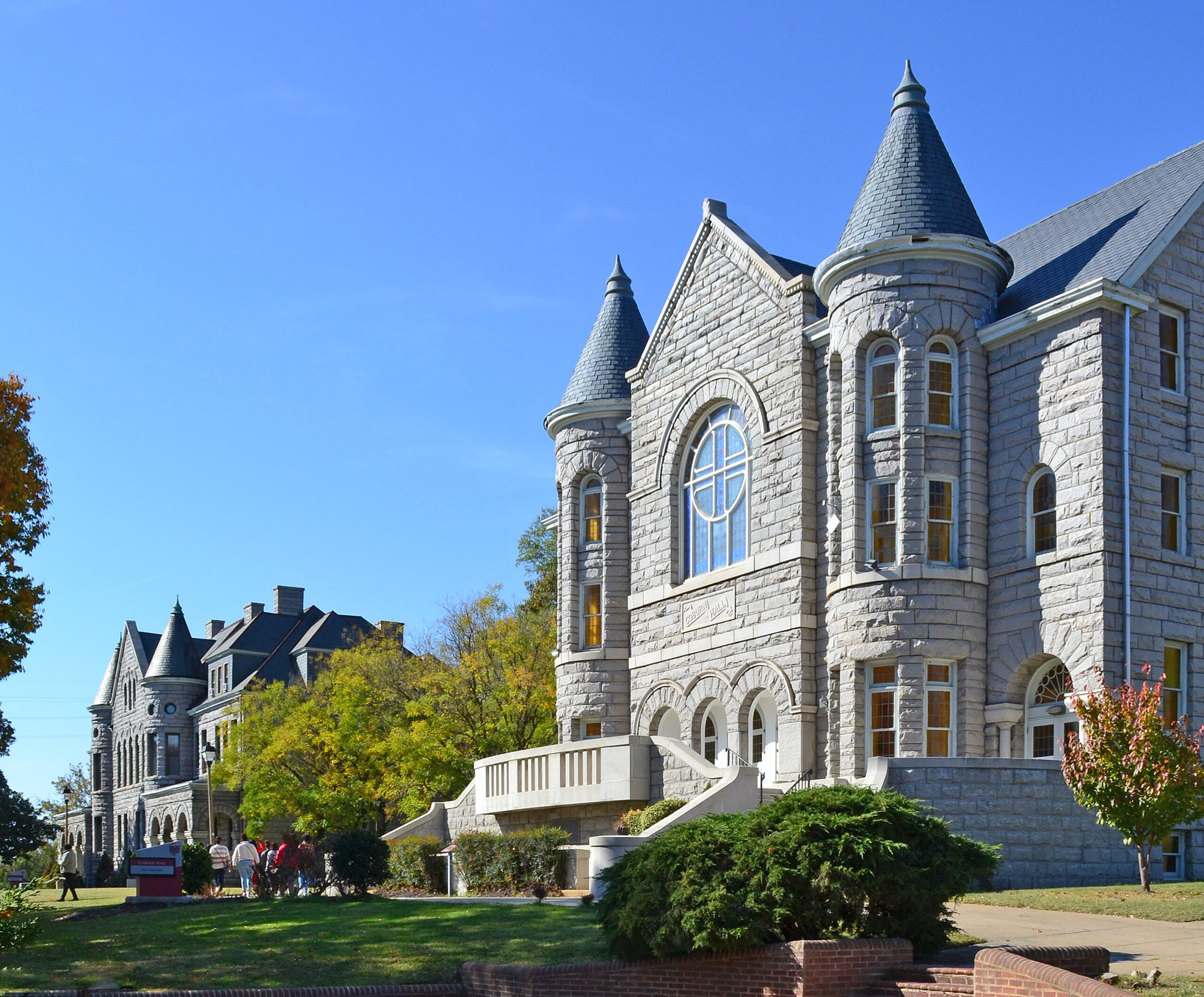
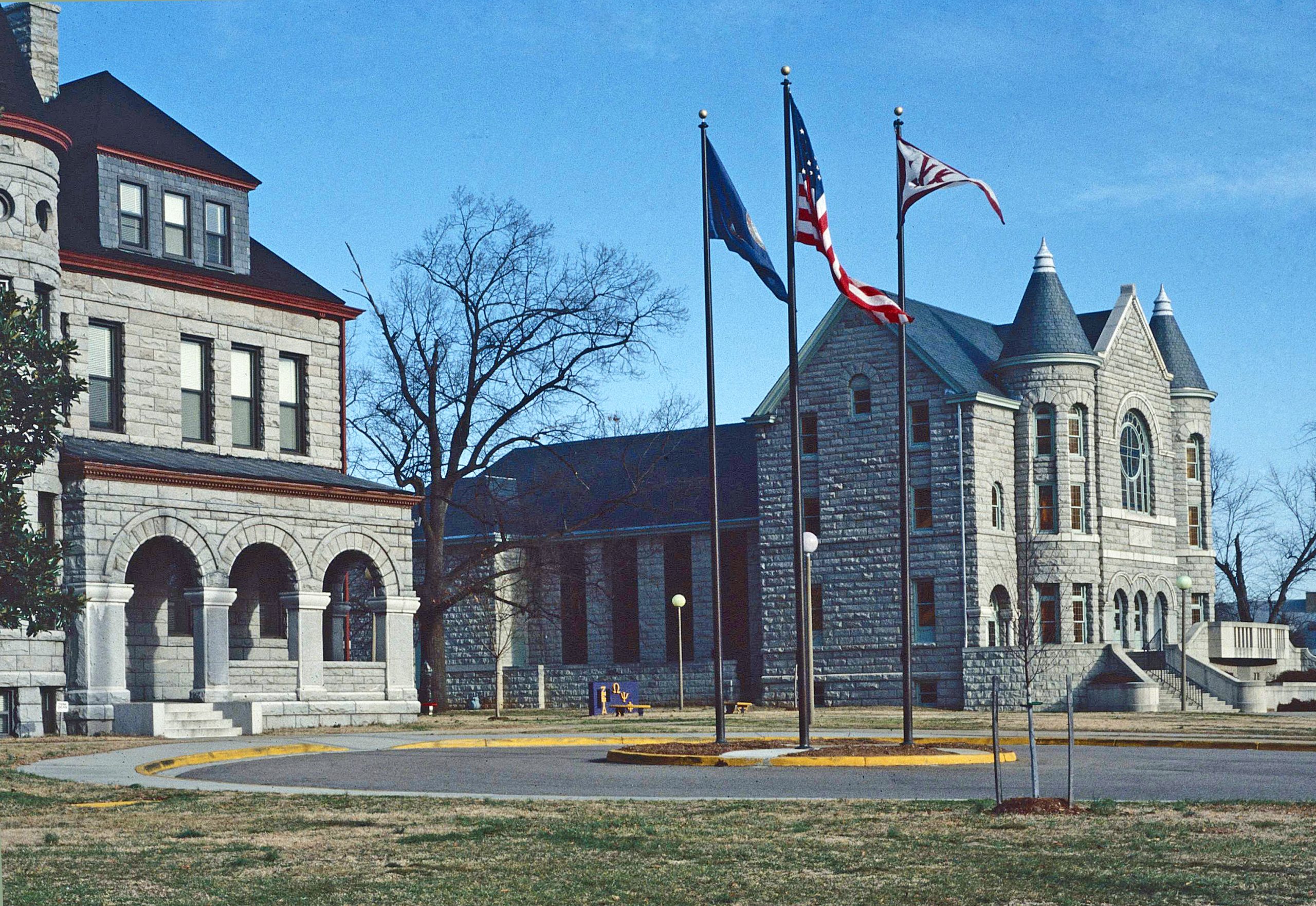
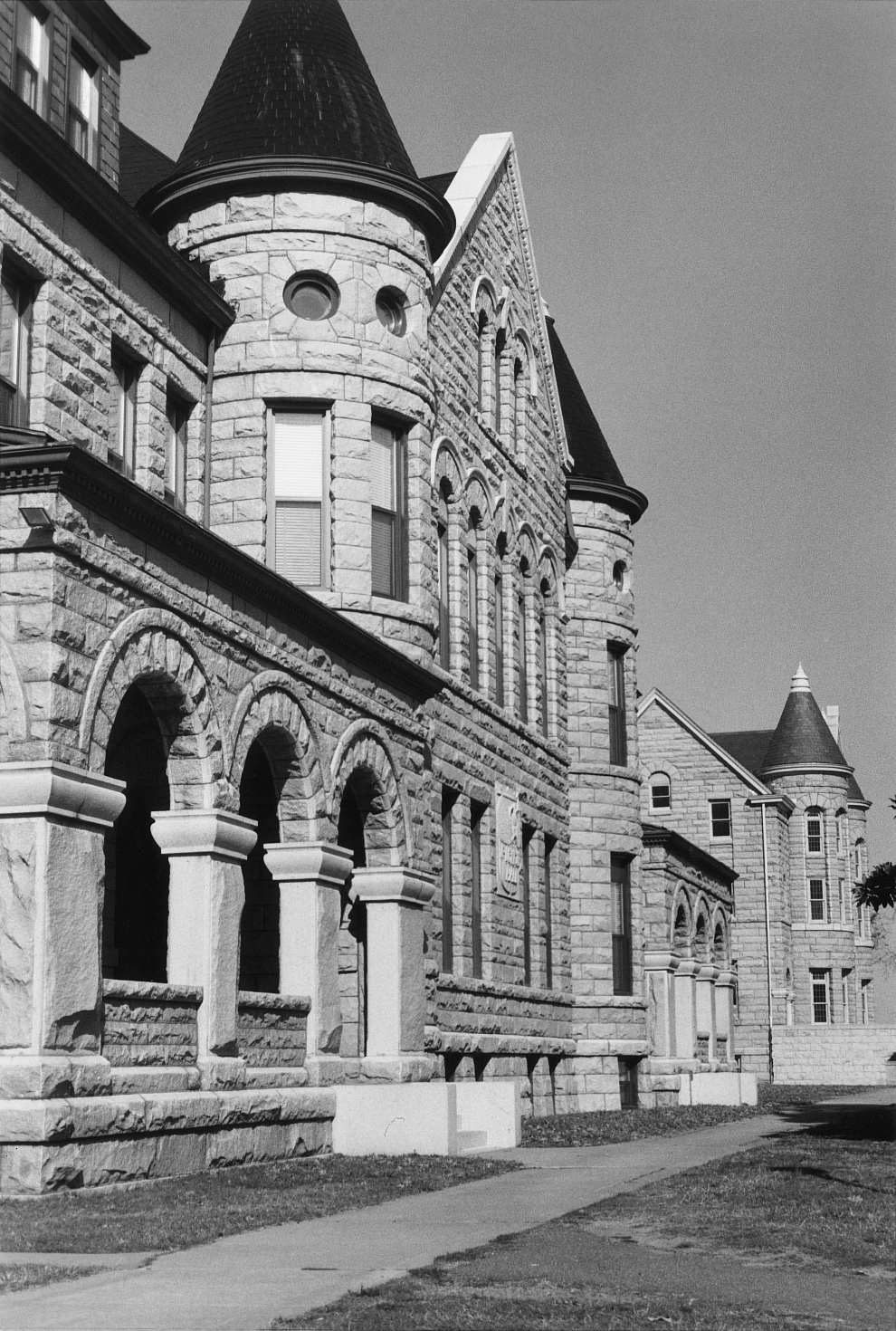
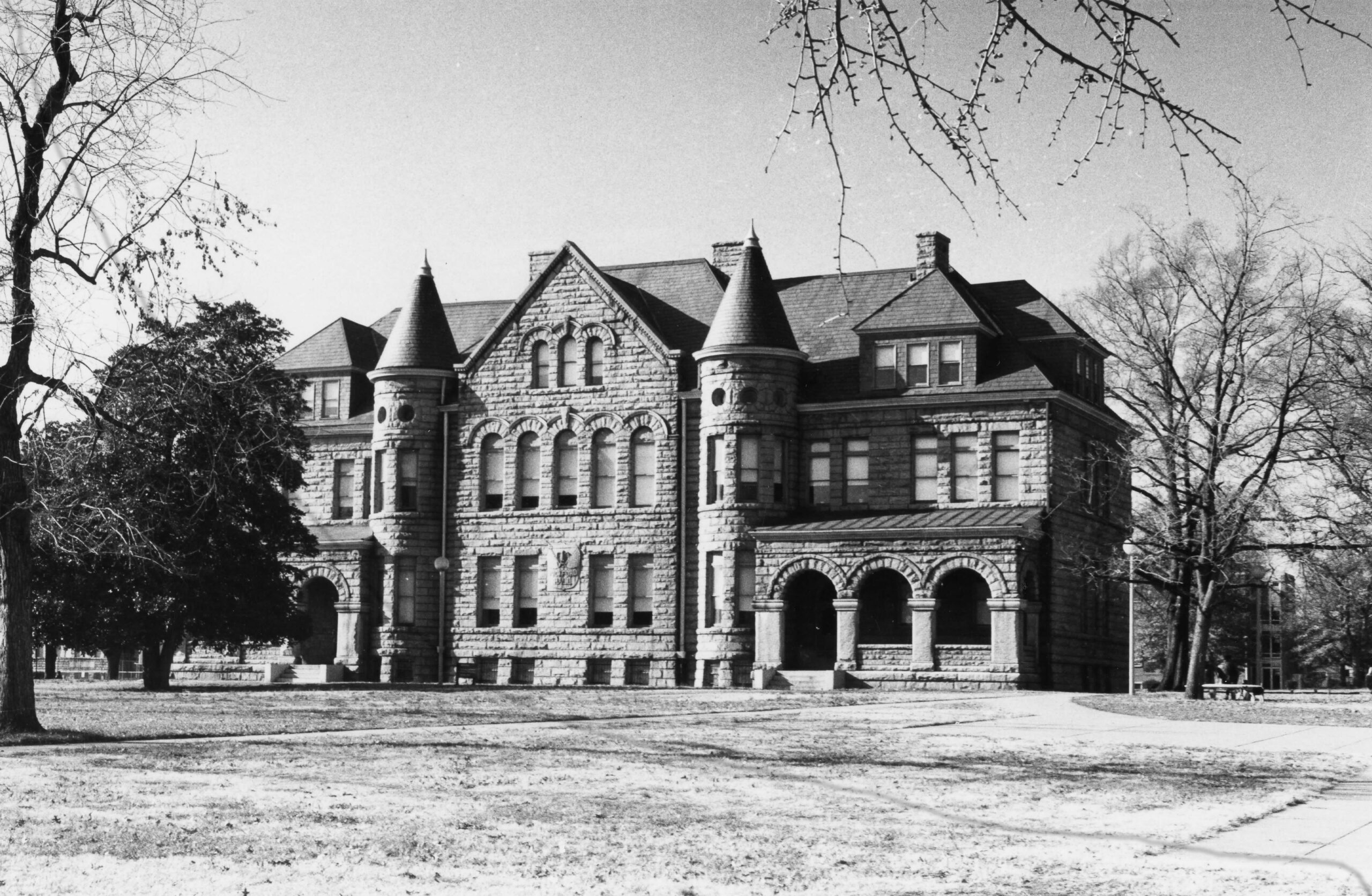
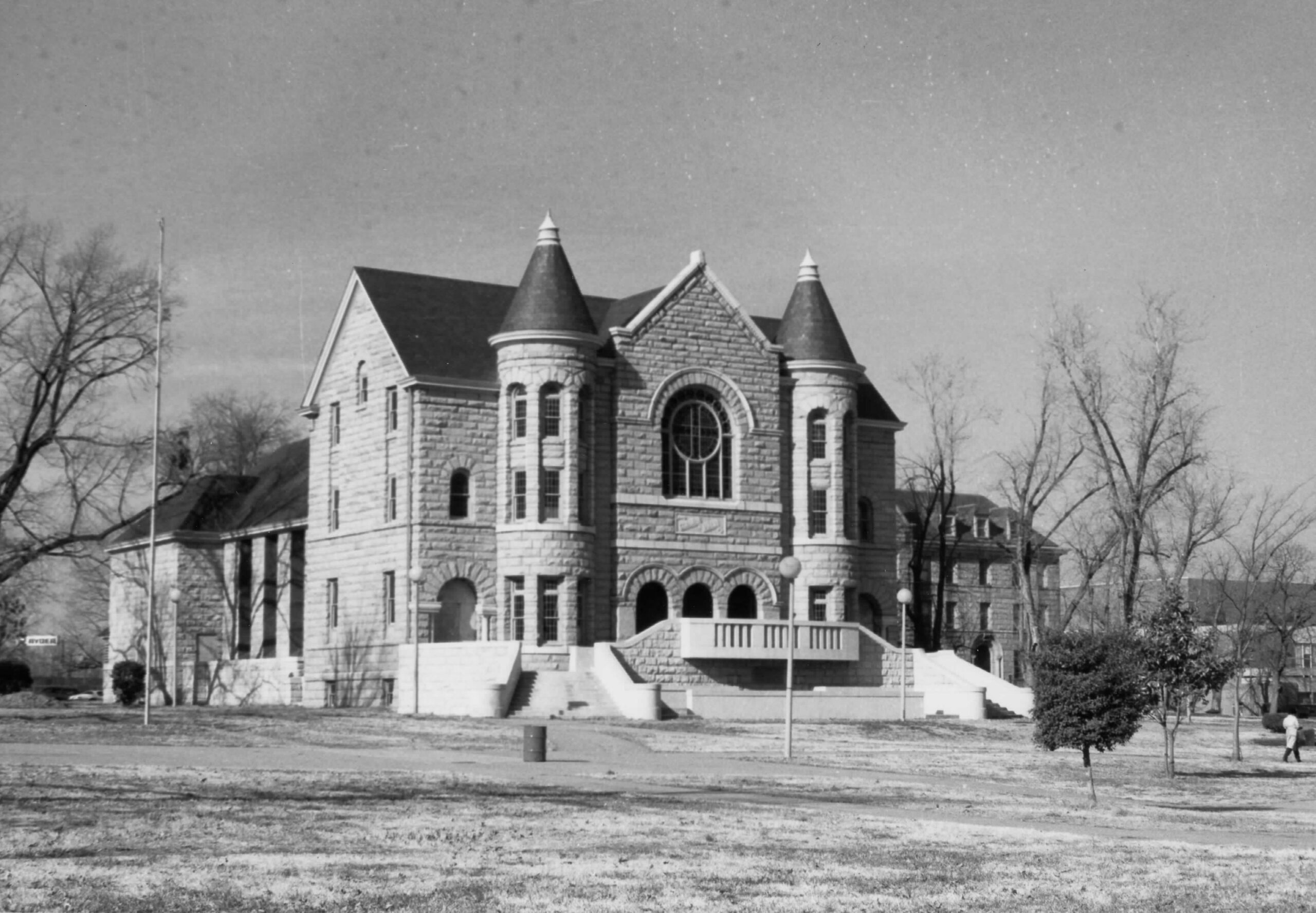
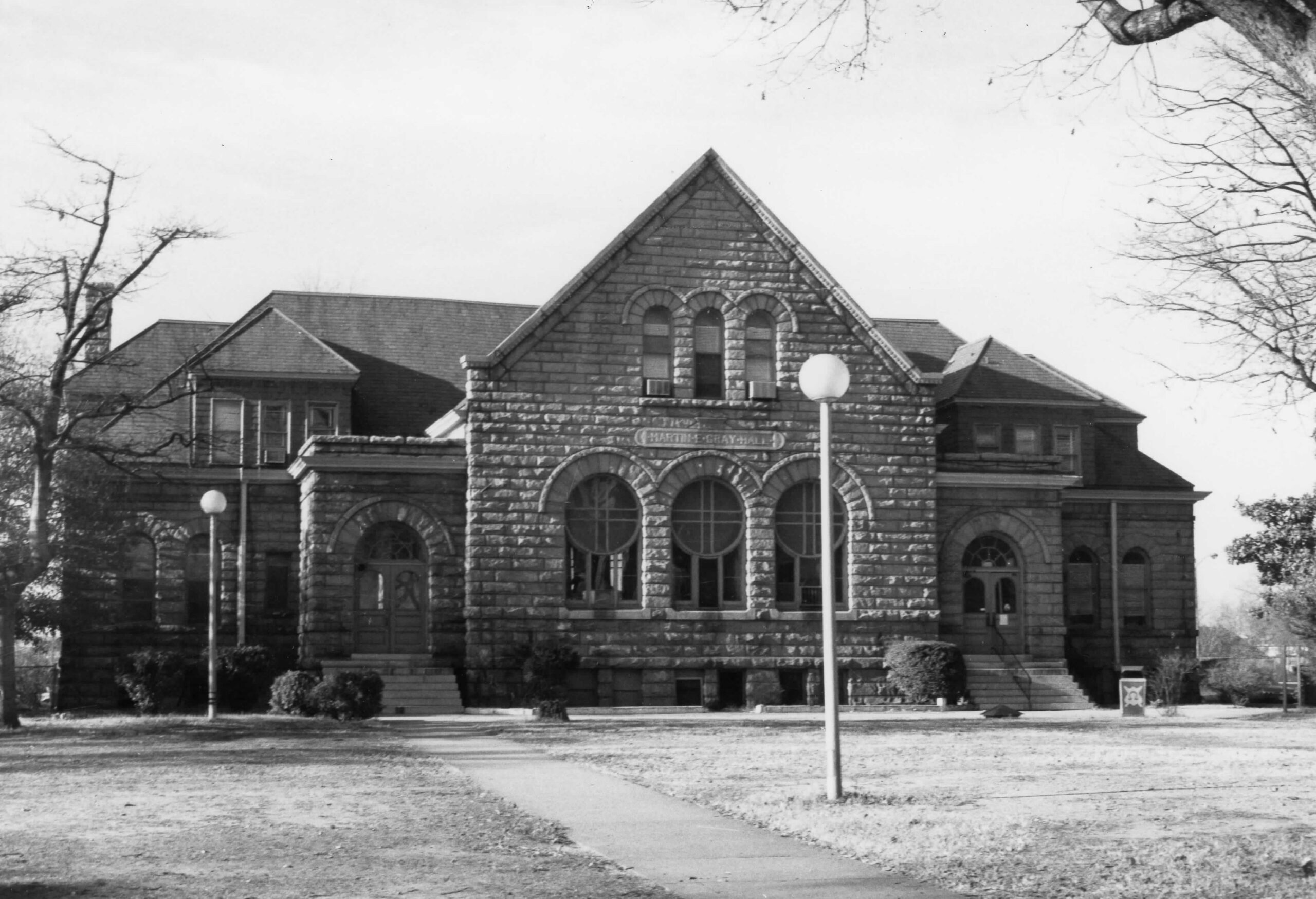
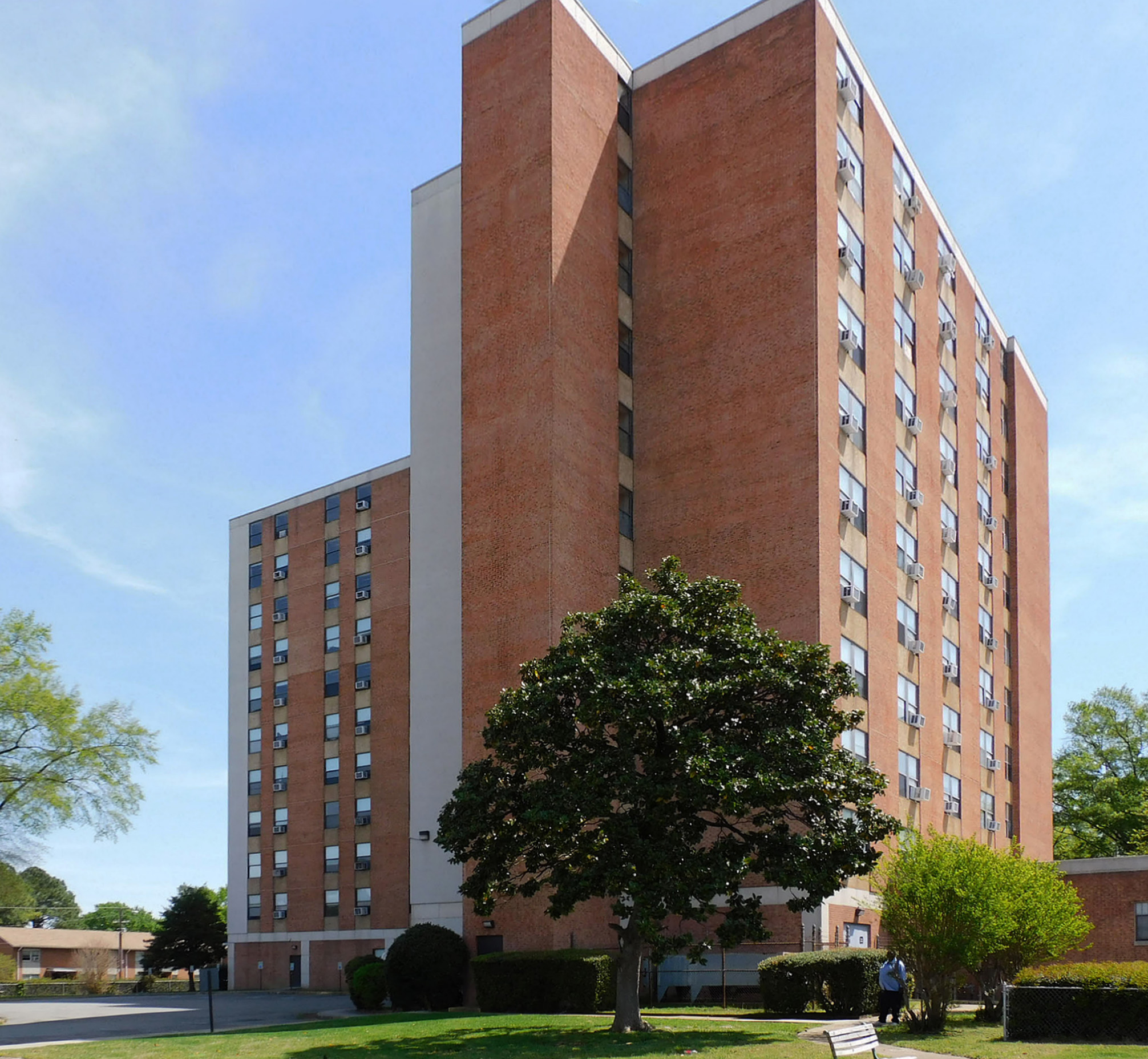
The history of Virginia Union University exemplifies the efforts to bring higher education to southern Blacks following the Civil War. Because literacy among formerly enslaved individuals was often limited to Black clergymen, seminaries and missionary societies frequently formed the kernels for Black colleges. Virginia Union began in 1896 through the merger of Richmond Theological Seminary and Wayland Seminary of Washington, D.C. Further mergers have transformed the school into a leading institution dedicated to higher education primarily for African Americans, though the school is now racially integrated. The main complex of Virginia Union University is a late Victorian collegiate grouping in the Romanesque Revival style. The gray granite dormitories, classroom buildings, chapel, president’s house, and power plant, each with its own massing and lively silhouette, were designed by Washington architect John H. Coxhead. A notable addition to the campus has been the Belgian Building, re-erected in 1941 after having served as the Belgian Pavilion at the New York World’s Fair of 1939.