
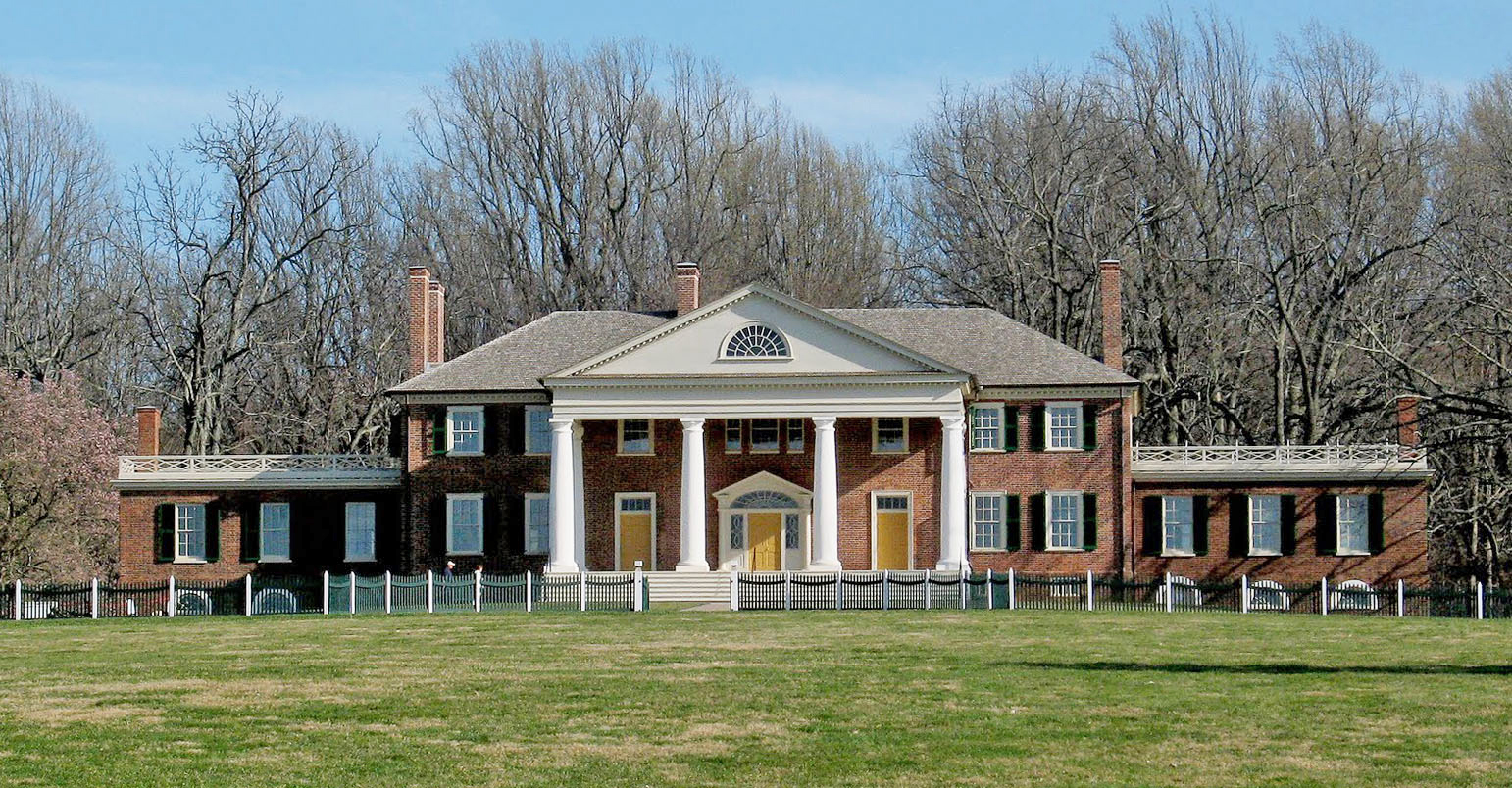
DHR manages the Virginia Landmarks Register and National Register programs in Virginia. Both Registers are lists of historically and culturally significant properties in Virginia, including buildings, sites, structures, districts, and objects, that have been recognized for their significance in Virginia’s history, architecture, archaeology, and culture. Nominations for historic properties in Virginia have been digitized and are available through DHR’s VLR Online portal. Through VLR Online, members of the public can read nominations and learn about the rich history and heritage of their community and Virginia’s historic places.
The Virginia Landmarks Register (VLR):
The National Register of Historic Places
Permission of a majority of private property owners is required for an individually nominated property or a historic district to be listed in the VLR or the National Register. Both types of listing are treated the same under state and federal laws and regulations.
What Does Listing a Property or Historic District in the VLR or National Register Mean?
Listing in the Registers:
Listing in the Registers Does Not —
A Property that can be Nominated for Listing in the Registers should:
Learn More:
The process for having your property evaluated for Register eligibility is explained at the webpage Preliminary Evaluation and Nomination Process. If you have additional questions, contact your nearest regional office.
Each nomination must be reviewed and approved by DHR before it will be scheduled for presentation to the Virginia State Review Board and the Board of Historic Resources. DHR is responsible for assuring that nominations meet the program’s guidelines and standards, are factually accurate, and conform to state and federal regulations. Nominations that do not meet these requirements will be returned to the property owner and/or author for revisions and will not proceed to the Boards until receiving approval by DHR.
Completed nominations that will be considered at the next quarterly meeting of the Virginia Board of Historic Resources and the Virginia State Review Board are posted at the Board Activities webpage about one month in advance of the board meeting.
For more information about the Registers, refer to the Frequently Asked Questions.
Registration is an honor bestowed on historic properties by the state and federal governments. It recognizes the historic value of a property and encourages present and future owners to continue to exercise good stewardship. Owners of registered properties may donate historic preservation easements (which can reduce real estate taxes), qualify for the state and federal historic rehabilitation tax credits, receive technical assistance from department staff for maintenance and rehabilitation projects, and purchase plaques that mark the property’s significance.
Not as a result of registration. Property owners who donate historic preservation easements, participate in the federal or state tax credit programs, or accept a federal grant must abide by certain restrictions on alterations or demolitions associated with those programs. Otherwise, only local building codes and permit requirements must be satisfied, as with any property.
A range of federal and state grants now are available for documenting, nominating, and preserving historic places. Please note that most of the grants do not offer funds for repairing historic resources such as single-family dwellings, commercial buildings, or structures such as barns, bridges, or industrial resources. Information about various financial incentive programs for historic properties is available on our Grants & Funding webpage.
Not necessarily. Registration informs owners, local planners, government agencies, and others involved in land-use planning of the existence of a historic resource. Neither the National Historic Preservation Act nor the Code of Virginia requires property owners, developers, or government agencies to avoid affecting or destroying historic resources. The National Historic Preservation Act does require, however, that federal agencies take historic properties into account when planning projects. State and federal agencies work with the public and property owners to mitigate the effects of a project on the historic property. A federal or state project usually will proceed even if it affects or destroys the historic resource; in some cases, however, a project may be redesigned to avoid the resource. DHR’s Review & Compliance Division manages federal and state undertakings that are subject to these procedures.
No. The Register criteria apply to places of local as well as of national or statewide significance. Many places are listed in the registers due to their architectural, engineering, or archaeological significance. Historic properties that are significant for their association with important historic events, trends and patterns of development, and individuals also are listed in the Registers.
The Department of Historic Resources (DHR) and National Park Service (NPS) do not charge any fees for any part of the nomination process. Costs may be incurred for items such as maps, postage, photocopies, and other materials the author may need to complete and submit the nomination packet. Many property owners successfully complete the Register eligibility evaluation process with advice from DHR staff. The preparation of a nomination is more complex and DHR staff do not have capacity to prepare nominations on behalf of a property owner. Staff are available, however, to provide guidance to anyone who is preparing a nomination for a Virginia property. Property owners also have the option of hiring a consultant to prepare a nomination. DHR’s Trades & Consultants Directory includes contact information for consultants with experience preparing nominations. We recommend that a property owner contact several consultants to compare estimated costs. Regardless of who prepares a nomination, the entire nomination packet must be reviewed and approved by DHR before it will be scheduled for presentation to the Virginia State Review Board and the Board of Historic Resources. There also are costs associated with ordering a register plaque for a historic property, and, again, contacting suppliers and comparing estimated costs and designs is recommended.
No. Only locally-designated historic districts are subject to local zoning ordinances and procedures that may include restrictions on use, maintenance, and/or alterations of private property. The process of designating a local district is entirely different from nominating a district to the Registers. Additionally, local designations often have an opt-out provision for property owners, whereas no such option exists when a district is nominated to the Registers. Such designation is entirely the purview of the local government. DHR has no involvement in designation of local historic districts. Listing of a historic district in the National Register and/or Virginia Landmarks Register does not automatically lead to local designation of the district.
No. Listing in the National Register of Historic Places or the Virginia Landmarks Register does not require that you open a building or make your property accessible in any way to the public. Private property rights are not curtailed by listing in the Registers.
Many factors affect the value of real estate: location, improvements, supply and demand, zoning, surroundings, local and national economic conditions, business cycles, and actions of national, state, and local governments. Changes in any of these factors may increase or decrease the value of property. Registration itself has not been shown to have any influence on property values.
Yes. However, property owners in districts already can receive the same benefits as owners of individually listed properties. In other words, if the district’s nomination includes the resource as contributing to the district, that property already is “just as registered” as if it were listed individually. If, however, a resource has been classified as noncontributing in the district’s nomination, it may be eligible for individual listing. Property owners are encouraged to review DHR’s evaluation and nomination process when contemplating whether they want to nominate their property for individual listing in the Registers.
Aluminum or vinyl siding is not a recommended treatment for historic buildings that predate the introduction of such siding because it may conceal historic features and/or may damage underlying historic material due to moisture retention. The national and state registers do not definitively exclude vinyl-sided buildings from consideration. A property must, however, retain physical integrity sufficient to convey its historic significance in order to be listed in the Registers. Non-historic and/or unsympathetic alterations tend to erode physical integrity. The cumulative effect of alterations may make a property not eligible for the Registers. Property owners are encouraged to review DHR’s evaluation and nomination process when contemplating whether they want to nominate their property for individual listing in the Registers.
The process consists of evaluation and nomination. During the evaluation phase, preliminary information about the property is examined by the DHR regional office and DHR’s Register Evaluation Committee, which then recommends to the State Review Board properties that appear to meet the criteria for registration. Once the evaluation phase is completed, property owners decide if and when they will proceed with a nomination of these qualified properties. As a general practice, DHR staff do not prepare nominations; however, as the State Historic Preservation Office, DHR is responsible for assuring that nominations meet program guidelines and standards, are factually accurate, and conform to state and federal regulations. Nominations that do not meet these requirements will be returned to the property owner and/or author for revisions.
Listing in the Registers in no way affects the transfer of property from one owner to another, or any other rights or responsibilities of property ownership.
The concept of a district precludes excluding noncontributing resources from the body of the district. The district’s boundaries are drawn to include the highest concentration of resources that contribute to the district’s significance, but there will often be properties within the district that are noncontributing. For example, a typical residential neighborhood or downtown commercial area is likely to have at least a few buildings of more recent construction (less than 50 years ago), or resources that have been extensively altered over time. In such instances, the resource is classified as noncontributing to the district.
| Marker | Register |
| Application process with deadlines based on quarterly schedule. Deadlines are in February, May, August, and October. | Nomination materials accepted any time of year. Nominations approved at quarterly board meetings (March, June, September, December). |
| Competitive application | Not competitive |
| Applicant/sponsor must pay for fabrication of marker (currently approx $3,000). | No cost to pursue register nomination, however, many property owners choose to hire an experienced consultant to prepare documentation because of complex technical requirements. |
| Topics of local significance do not qualify. Topics must be of regional, statewide, or national significance. | Properties may be listed under local, state or national level of significance. |
| Physical status of a place not a factor in marker topic selection. A building or site that has been demolished may still be a viable marker topic. | Physical status (integrity) plays an important role in determining if a building/site/neighborhood etc. qualifies for the Registers. Heavily altered buildings or locations may not qualify. |
| Process may take between a year and 15 months from initial application to installation. | Process may take up to a year from initiation of the process to approval by the National Park Service and often longer depending upon the complexity of the nomination. |
| Topics and final text must be approved by the governor-appointed Board of Historic Resources | Nomination materials must be approved by the governor-appointed Board of Historic Resources and the DHR Director-appointed State Review Board. After approval by these boards, the National Park Service provides final approval for listing in the National Register. |
| Highway markers, applications, and approvals do not have any bearing on grants or other incentive programs. | Successful listing in the Registers makes a property eligible for application to certain state and federal historic preservation grants, rehabilitation tax credits, and qualifies a property for DHR’s Easement program. |
| Markers are not honorific in nature. Their purpose is educational rather than celebratory. | The purpose of listing a property in the Registers is for documentation and planning purposes and to acknowledge that a place is worthy of preservation. A resulting benefit of listing in the Registers is that a property becomes eligible for application to certain state and federal historic preservation grants, rehabilitation tax credits, and DHR’s Easement program. |