Virginia Department of Historic Resources
For Immediate Release
Contact:
Ivy Tan
Department of Historic Resources
Marketing & Communications Manager
ivy.tan@dhr.virginia.gov
804-482-6445
Virginia Designates 10 Historic Sites as State Landmarks
—The newly designated landmarks are in the counties of Louisa, Henrico, King William, Dinwiddie, Fairfax, and Shenandoah, and in the cities of Newport News, Norfolk, Buena Vista, and Danville—
RICHMOND – Among the 10 places recently listed in the Virginia Landmarks Register are a Reconstruction-era church and cemetery founded by freedmen and freedwomen in central-eastern Virginia; a historically Black middle-class neighborhood located just south of Alexandria that highlights the self-determination and resilience of Black Virginians against 20th-century Jim Crow; and a large tobacco warehouse complex in Danville that reflects the historical importance of the tobacco industry to Southside Virginia’s economy.
The Commonwealth’s Board of Historic Resources approved these properties for designation on the Virginia Landmarks Register (VLR) during its quarterly public meeting on September 18, 2025, in Richmond. The VLR is the commonwealth’s official list of places of historic, architectural, archaeological, and cultural significance.
At the conclusion of its meeting, the Board approved the following places for listing in the VLR:
In the state’s Eastern Region,
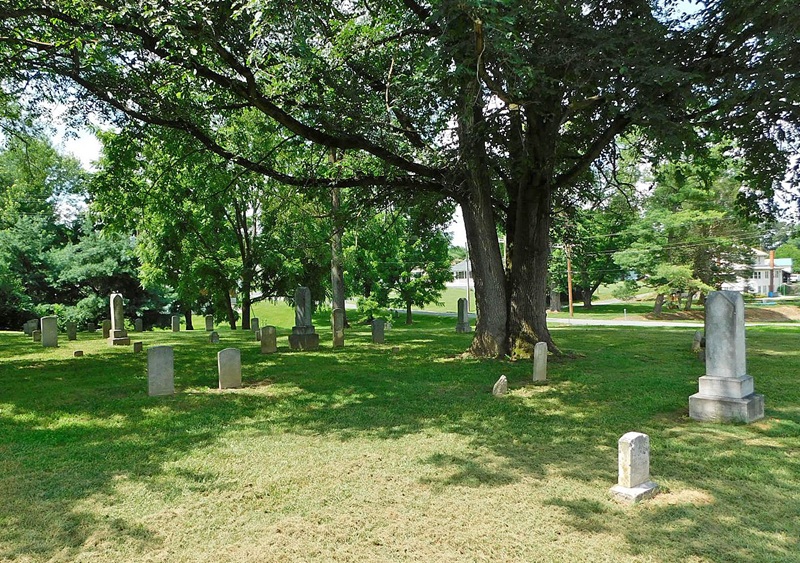
- Occupying just over 30 acres of gently rolling terrain in Henrico County, Woodland Cemetery was established as a resting place for Black citizens in the county and the City of Richmond during Jim Crow segregation in the 20th century. Founded by Richmond Planet editor John Mitchell, Jr., the cemetery opened in 1917 and quickly became a symbol of the Black community’s resistance against segregation and discrimination. Arthur Ashe and Zenobia Gilpin are among the well-known individuals buried at Woodland, which continues to accept interments in the present-day.
- Bear Garden in rural southwestern King William County was constructed in three separate phases starting in circa 1796 through the turn of the 20th century. A one-story, Federal-style frame house that expanded over the course of roughly a century to include two additions, Bear Garden is representative of the Tidewater-region homes built after the Revolutionary War that evolved over time to meet the needs of its residents.
- From 1913 to 1963, Rocky Branch School in Dinwiddie County functioned as a segregated public school for Black children in the Rocky Branch Baptist Church community of Sutherland, Virginia. First built in circa 1913, the school housed a single classroom with one teacher for all grades. In 1928, Rocky Branch expanded to include a second classroom after local patrons acquired from the Dinwiddie County School Board a section of a former nearby school and added it to the original school building. Rocky Branch School is designated on the Virginia Landmarks Register under the African American Schools in Virginia Multiple Property Documentation Form.
- The three-story Daily Press Building in the City of Newport News was completed in 1968 to house all of the expanding newspaper’s operations, including offices for staff as well as the paper’s printing and distribution headquarters. The building was designed in the New Formalist architectural style by Forrest W. Coile, a prolific Newport News architect whose career produced hundreds of commercial, educational, and institutional buildings from the 1930s through the 1970s.
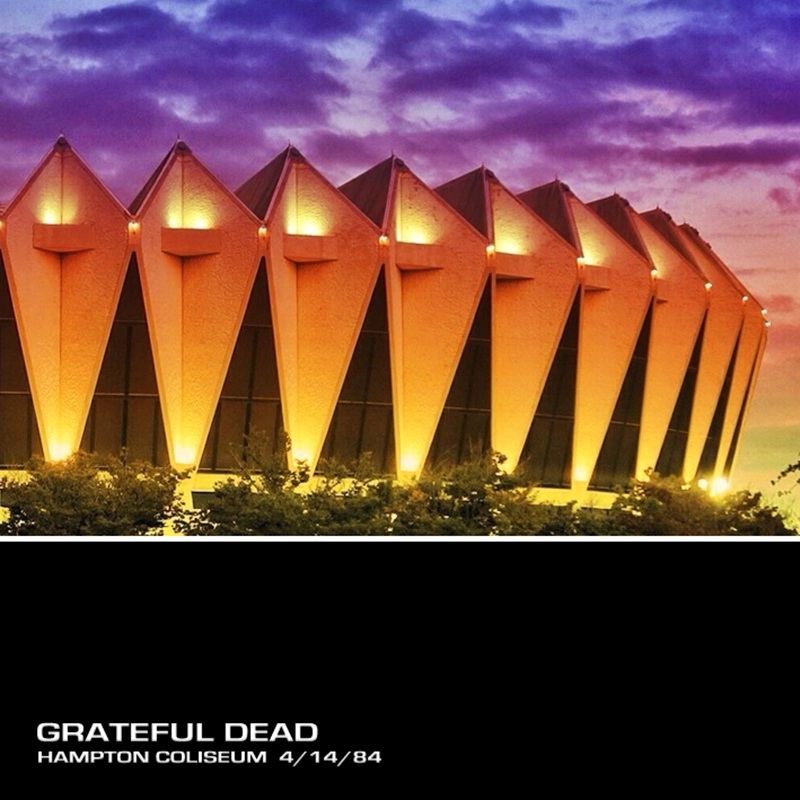
- Constructed from 1968 to 1972, the Norfolk Cultural and Convention Center exemplifies the height of the Modern Movement in architecture and urban planning in the mid-20th century in the City of Norfolk. The Center encompasses several city blocks and includes a domed arena known as SCOPE, a theater named Chrysler Hall, a raised podium, and a parking garage. Designed by Italian architect Pier Luigi Nervi and the local firm Williams and Tazewell & Associates, the Center was built to serve as a space for cultural exchange and community enrichment in addition to entertainment and recreation.
In the state’s Northern Region,
- Established in Fairfax County between 1962 and 1974, the William H. Randall Estates Historic District is a 20-acre Black residential subdivision created based on the vision of Jube Shiver, Sr., an African American teacher who sought to develop a neighborhood for professional, middle-class Black families after he and his family had trouble finding a home during Virginia’s Jim Crow era, when African Americans were excluded from residential communities through racially restrictive deed covenants and financial redlining. The development of Randall Estates, an initiative led by Shiver, is representative of the Black community’s self-determination and resilience in the face of discrimination and oppression.
- Nestled in idyllic rural Shenandoah County between the small villages of Quicksburg and Forestville, the Wine House was built in 1815 as a two-story log dwelling atop a limestone foundation. The house features a layout and construction methods unique to the architectural heritage of Shenandoah County and the surrounding areas. The addition of a one-and-a-half story ell in circa 1870 demonstrates the evolution of architecture and building practices in response to economic and social changes experienced by the property owners in the Shenandoah Valley.
In Virginia’s Western Region,
- Parry McCluer High School served as the principal public school for White students in the City of Buena Vista beginning in 1924. The school opened to Black students in the mid-1960s after integration at Virginia’s public schools. The school library operated as the Buena Vista Public Library from 1948 to circa 1971. Constructed in the Classical Revival architectural style with Modernist additions, the building remains in use as the Parry McCluer Middle School and school board offices.
- Built in 1936-1939 by the P. Lorillard Tobacco Company, one of the oldest tobacco companies in the nation, the Lorillard Tobacco Company Warehouse Complex played an important role in the industrial history of the City of Danville, where tobacco storage and cigarette manufacturing served as a major economic catalyst starting in the late 19th century. In 1974, after a rise in crop-destroying beetles and moths, the company renovated the complex to change the warehouse storage system from an “open-type” to a “closed-type”. The tobacco industry continues to contribute to Danville’s economy today.
The Board also approved in its September meeting the updated National Register of Historic Places (NRHP) Registration Form for the Abingdon Historic District. The updated form includes additional documentation reflecting new research on the historic resources located within the district.
DHR will forward the documentation for the newly listed VLR sites to the National Park Service for nomination to the NRHP. Listing a property in the state or national registers is honorary and sets no restrictions on what owners may do with their property. The designation is foremost an invitation to learn about and experience authentic and significant places in Virginia’s history. Designating a property to the state or national registers—either individually or as a contributing building in a historic district—provides an owner the opportunity to pursue historic rehabilitation tax credit improvements to the building. Tax credit projects must comply with the Secretary of Interior’s Standards for Rehabilitation.
###