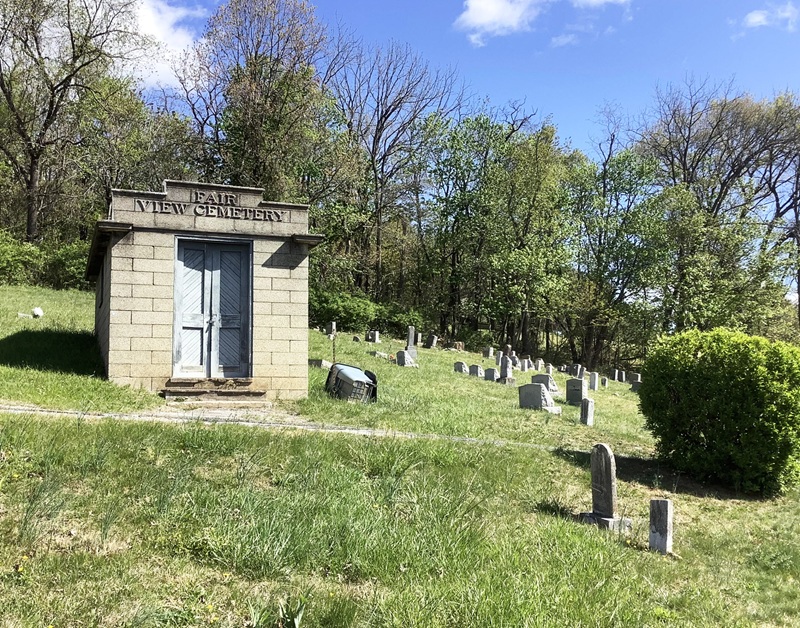
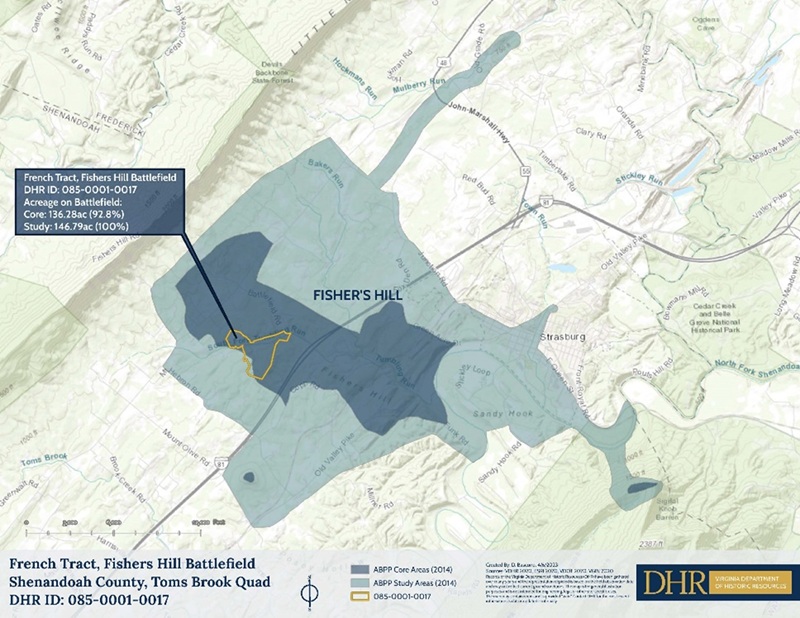
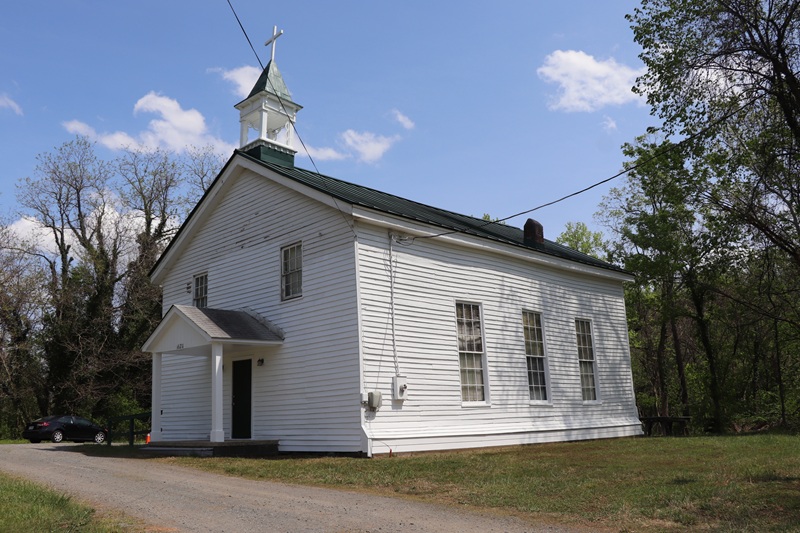
A brief overview of two foundational concepts underpinning the Virginia Landmarks Register and the National Register of Historic Places.
By Austin Walker | National Register Program Manager
Established under the National Historic Preservation Act (NHPA) of 1966, the National Register of Historic Places is the nation’s official list of historic properties worthy of preservation, administered by the National Park Service. Properties listed in the National Register include districts, sites, buildings, structures, and objects that are significant in American history, architecture, archaeology, engineering, and culture.
Also in 1966, just a few months prior to the passage of the NHPA, the Virginia General Assembly established the Virginia Historic Landmarks Commission, now the Department of Historic Resources. As part of its role as the State Historic Preservation Office, DHR is responsible for nominating properties to the National Register. In addition, the Code of Virginia tasks the Department with designating, managing, and publishing its own official list of properties important to the Commonwealth’s history – the Virginia Landmarks Register.
The same evaluation criteria are used for nominating properties to both the National Register of Historic Places and the Virginia Landmarks Register. However, this framework also extends beyond just the Register program, forming the basis for evaluating historic resources as part of Federal and State Review, as well as determining a property’s eligibility for Historic Rehabilitation Tax Credits, Preservation Easements, and DHR’s Black, Indigenous, and People of Color (BIPOC) Historic Preservation Grant Program.
Given the central role that the National Register evaluation process plays in identifying and encouraging preservation of Virginia’s significant historic resources, what exactly makes a property eligible for register listing?
The Basics
Broadly speaking, to be eligible for listing in the National and State Registers, a property must:
- Be at least 50 years of age, unless it possesses exceptional significance
- Satisfy at least one of the four National Register Criteria
- Demonstrate integrity through retention of historic materials, appearance, design, and other physical features
The first point is fairly straightforward: from the time of its inception, the National Register has used the 50-year period as a guideline for evaluating historic resources worthy of preservation in order to assure historical perspective and avoid judgements based on recent popular trends. That said, properties that have achieved significance within the past 50 years can be eligible for register listing if they are of exceptional importance. “Exceptional” is left necessarily open-ended. It may reflect the extraordinary impact of an event, or the fragility of an entire category or resources. It may also apply to the design of a building or structure that is quickly recognized as historically significant by scholars or professionals. It could even be a function of a community’s perceptions of old and new, or its unusually strong attachment to a resource. However, as a general rule, resources that are less than 50 years of age or that have achieved significance within the past 50 years are not yet considered eligible for listing – though they may be in the future.

Identifying Significance: The National Register Criteria
In defining the quality of significance in American history, architecture, archaeology, engineering, and culture, the Code of Federal Regulations has established four Criteria for Evaluation for the National Register, enumerated as A, B, C, and D. Properties may satisfy multiple criteria, but only one is necessary for listing in the historic registers.
Criterion A: Event
Properties can be eligible for the National Register if they are associated with events that have made a significant contribution to the broad patterns of our history.
Of the four National Register Criteria, Criterion A is the one with the widest reach, recognizing historic resources that have important, documented associations with single events as well as with “a pattern of events, repeated activities, or historic trends.” Specific events – moments important to local, state, or national history – could include the site of a battle, an important invention or medical breakthrough, a labor strike or Civil Rights demonstration, or a pivotal archaeological discovery.
More often, however, properties proposed for listing under Criterion A are reflective of broader patterns over time, such as migration and early settlement; the development of laws and systems of governance; the growth of local commerce, agriculture, industry, or infrastructure; the evolution of public education; or the lifeways of particular communities and social groups.


Criterion B: Person
Properties may be eligible for the National Register if they are associated with the lives of persons significant in our past.
Rather than historical events or trends, Criterion B focuses on significant people – specifically, individuals whose important contributions to history can be identified and documented. Examples might include the home of an important political figure, the studio of a significant artist, or the headquarters of an important industrialist. However, the individual in question must be demonstrably significant within a particular local, state, or national historic context.
A key consideration to keep in mind is that properties eligible under Criterion B are generally associated with the person’s productive life, reflecting the period when they achieved significance. Properties that pre- or post-date an individual’s significant contributions are typically not eligible. For this reason, birthplaces and graves of significant individuals do not qualify under Criterion B unless the person is of outstanding importance and there is no other appropriate site or building associated with their life.
Each property associated with a significant individual should be compared to other associated properties to identify those that best represent the person’s historic contributions. Several properties may be eligible for associations with the same person if each represents a different aspect of their productive life. Resources with brief but consequential associations with a significant person may also be eligible.


Criterion C: Design/Construction
Properties may be eligible for the National Register if they:
- Embody the distinctive characteristics of a type, period, or method of construction;
- Represent the work of a master;
- Possess high artistic values; or
- Represent a significant and distinguishable entity whose components may lack individual distinction
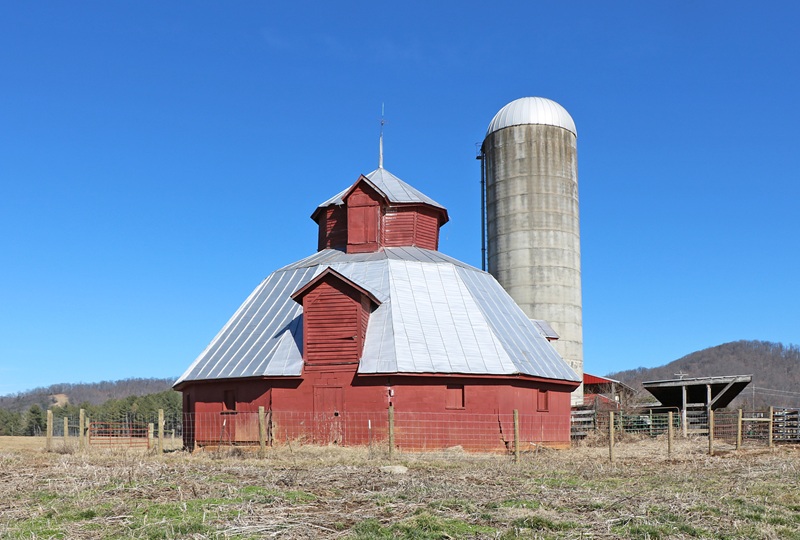
Moving away from historic associations, Criterion C applies to those properties that are significant for their physical design or construction, including architecture, landscape architecture, engineering, craftsmanship, and artwork. Properties eligible under Criterion C may exemplify a significant architectural style, landscape design philosophy, or vernacular building practice through physical features such as form, proportion, structure, plan, or materials. Engineered structures such as bridges or dams that reflect important technological advances can also qualify under Criterion C.

Properties may also be eligible under Criterion C as the work of a master. The National Register defines a master as “a figure of generally recognized greatness in a field, a known craftsman of consummate skill, or an anonymous craftsman whose work is distinguishable from others by its characteristic style and quality.”
Architects are the figures most commonly proposed as “masters,” but it is important to note that being designed by a prominent architect does not automatically qualify a property as the work of a master. A designer’s “recognized greatness in a field” must be articulated, and the property itself must express a particular phase in the development of the master’s career. However, properties that do not qualify as the work of a master may still be eligible under other portions of Criterion C – for example, as a significant representative of an architectural style.

Criterion C can also apply for a “significant and distinguishable entity whose components may lack individual distinction.” This is simply in reference to historic districts, which the National Register defines as “a significant concentration, linkage, or continuity of sites, buildings, structures, or objects united historically or aesthetically by plan or physical development.”
Districts eligible under Criterion C may include historic residential neighborhoods, downtown commercial cores, large rural areas retaining vernacular building forms, or planned suburban developments. While specifically noted under Criterion C, districts may be eligible under all four National Register Criteria.
Criterion D: Information Potential
Properties may be eligible for the National Register if they have yielded, or may be likely to yield, information important in history.
Continuing with the actual physical material of cultural resources, Criterion D encompasses properties that have the potential to answer important research questions about human history. Most commonly applied to archaeological sites, Criterion D requires that a property possesses configurations of artifacts, soil strata, structural remains, or other features that make it possible to test hypotheses, corroborate or amplify current information, or identify continuities or discontinuities in the archaeological record of a particular area. For a property to be eligible under Criterion D, it must be associated with human activity.
The investigative techniques required to support a property’s information potential will vary based on the historic context and research questions proposed. These data requirements will also inform assessment of a property’s integrity.

Evaluating Integrity
Equally integral to the National Register evaluation process is the concept of integrity – the ability of a property to convey its significance through its physical features. To be eligible for listing in the historic registers, a property must not only be shown to have significance under one or more of the evaluation criteria; it must also possess several, if not most, of the seven aspects of integrity defined by the National Register. While each of these seven aspects is considered when evaluating a property, they can be understood in complementary groupings related to a property’s site and surroundings, its physical fabric, and its historic character.
Location is the place where a historic property was constructed or where a historic event occurred, while setting is the property’s physical environment, or the character of the place. Together, these aspects are important to recapturing the sense of a historic property, the conditions under which it was built, and the function it was meant to serve. As a result, properties that have been moved from their historic locations are generally not considered eligible for listing due to the overwhelming loss of these historical associations.
Design refers to the combination of elements that create the form, plan, space, structure, and style of a property. For individual buildings or structures, this includes things like structural system, massing, arrangement of spaces, door and window patterns, and ornamentation. For districts, it also applies to the way in which individual buildings, structures, or sites are related, as well as the visual rhythm of streetscapes and the layout of walkways or roads.
Materials are the physical elements that form a historic property, as well as the patterns, configurations, or combinations in which they are arranged. Workmanship is the physical evidence of the crafts of a particular culture or people during a given period. Together with design, materials and workmanship convey the aesthetic principles of a period as well as the availability and application of materials and technologies.
Feeling is a property’s expression of the aesthetic or historic sense of particular period of time, while association refers to its direct link with an important historic event or person. Both feeling and association require the presence of physical features that convey a property’s historic character. A common question for gauging integrity of feeling and association is: to what extent would someone from a property’s period of significance still recognize it today?
All properties change over time, and it is not necessary for a resource to retain all its historic physical features to be eligible for listing in the historic registers. Integrity is ultimately a function of significance, and fully establishing why, when, and where a property is important will help determine the essential, character-defining features that must be present and assess which aspects of integrity are most vital. A property significant under Criterion C, for example, will need to retain integrity of design, materials, and workmanship, though location, setting, feeling, and association may not be as critical. Likewise, a property significant under Criteria A or B will not be as reliant on design and workmanship, though location, setting, feeling, and association will be important to conveying significance. For properties significant under Criterion D, integrity is based on the ability to yield specific, sufficiently intact data to answer the important research questions identified.
Finally, it is important to distinguish between integrity and condition. A significant historic property may be in poor physical condition while still retaining sufficient integrity to convey its significance. In such cases, it is all the more vital to clearly and methodically define the physical features that are essential to the property’s integrity, as well as any other considerations that may help contextualize the property and its condition.
- For more detailed guidance on the National Register Criteria, please refer to the National Park Service Bulletin, How to Apply the National Register Criteria for Evaluation, as well as the National Register Publications page.